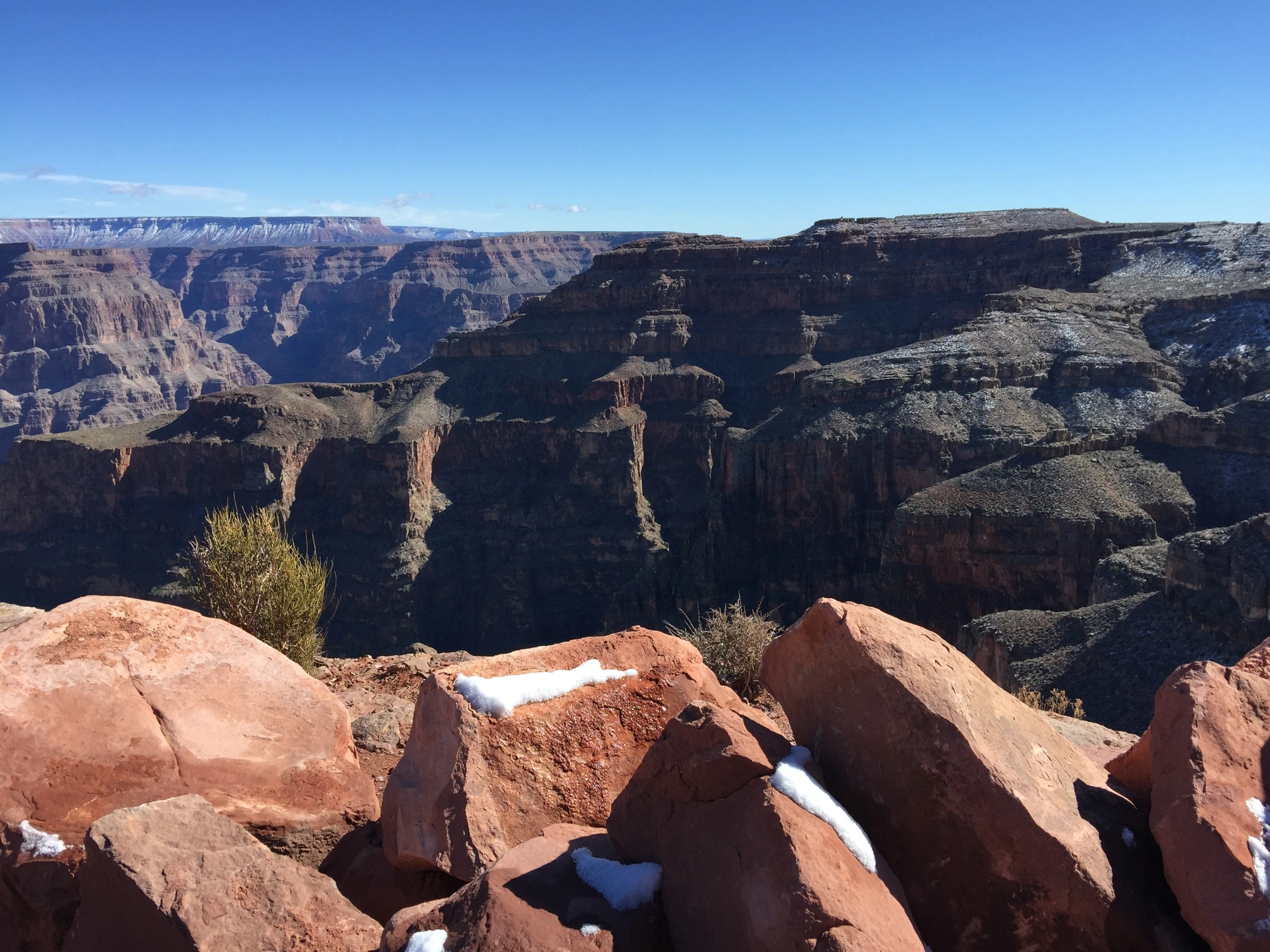
4 hr
Grand Canyon Helicopter Flight & Optional Hummer Adventure
- Private experience
- Personal attention
- Premium amenities
- Free cancellation
Grand Canyon Helicopter Tour to Bottom — Canyon-Floor Landings & Colorado River Flights
Rotor blades over red rock, a river waiting below
Compare fares, pick the fit — all bookings are mobile-voucher and eligible for free cancellation where shown.
4 hr
4 hr 30 min
45 min
A grand canyon helicopter tour to bottom is the most direct way to land on the canyon floor. This West Rim helicopter landing tour on Hualapai Tribe land also includes entry to the famous Skywalk. Be sure to purchase your grand canyon helicopter tour to bottom tickets in advance to secure your departure time.
|
Top pick Helicopter Pontoon Package Helicopter & Boat Tour |
The Grand Escape Package Rafting & Helicopter Ascent | |
|---|---|---|
| Canyon floor landing | ✓ (Down and back flights) | ✓ (Ascent flight only) |
| Water activity | 15-minute pontoon boat ride | Motorized white water rafting |
| Tour duration | 45 minutes | 11 hours |
| Departure point | Grand Canyon West Airport | Hualapai Lodge |
| Skywalk access | ✓ (All-Access Pass included) | ✓ (All-Access Pass included) |
| Base price | $418 USD per person | $589 USD per person |
| Best for | First-timers wanting quick canyon access | Active travelers seeking full-day adventure |
| See tickets & prices |
Verdict: We recommend the pontoon package for travelers seeking a classic grand canyon helicopter tour to bottom tour on the Colorado River. The shuttle service will then take you to other viewpoints. Those seeking more adventure should compare the grand canyon helicopter tour to bottom tours.
Worth it for bucket-list first-timers
You start at 67 USD General Admission to Grand Canyon West, including shuttle service, which only gets you to the rim. A grand canyon helicopter tour to bottom is the one option that actually sets you down on the canyon floor beside the Colorado River, and that exclusivity is where the money goes. Aerial-only helicopter flyovers show the West Rim and Hualapai land from the air, but they skip the landing that turns a sightseeing loop into a real memory. Bookable options like the Grand Canyon Helicopter Flight & Optional Hummer Adventure and the West Rim Helicopter Landing & Strip Flyover pair the descent with Hummer or pontoon add-ons, so the premium buys more than air time. If your budget is tight and you mainly want photos, a scenic flyover delivers. For a genuine floor-standing run, the descent pays off.
Bottom line: For anyone chasing the canyon floor, the bottom-landing flight justifies its higher cost.
If you want to land near the Colorado River, the grand canyon helicopter tour to bottom is the only option that descends below the rim. This landing occurs exclusively on Hualapai tribal land, offering a close-up perspective of the ancient rock layers. Conversely, the South Rim flyover remains high above the plateau, showcasing the vast expanse of the national park from an aerial vantage point. Before booking, securing grand canyon helicopter tour to bottom tickets in advance is highly recommended. These permits sell out quickly during the summer months. For those starting their journey from Las Vegas, these landing excursions provide a comprehensive day-trip experience, while travelers already at the national park usually prefer the quicker, non-landing flights.
|
Top pick Canyon Landing Tour |
South Rim Flyover Tour | |
|---|---|---|
| Departure Point | Las Vegas or Grand Canyon West | Grand Canyon National Park Airport |
| Landing Ability | ✓ Landing permitted on canyon floor | — No landing (strictly aerial) |
| Flight Duration | 15–90 minutes (depends on departure) | 25–50 minutes of continuous flight |
| Canyon Area Covered | West Rim and Hualapai Lands | South Rim and North Rim |
| Key Sights | Colorado River, Guano Point, Mojave Desert | Dragon Corridor, Imperial Point, Kaibab Forest |
| Price Range | $289–$739 USD (summer 2026) | $269–$449 USD (summer 2026) |
| See tickets & prices |
Verdict: Ultimately, choosing grand canyon helicopter tour to bottom tours guarantees an immersive canyon floor descent and a walk along the river, whereas the South Rim flyover is strictly a scenic flight over the Kaibab National Forest that focuses on broad geological panoramas.
Hand-picked experiences loved by thousands of travelers
10.5 hours
Free Cancellation
Full-day coach trip to Grand Canyon West with Skywalk option, Hoover Dam photo stop, and WiFi onboard.
3.5 hours
Free Cancellation
Fly from Vegas to the Grand Canyon floor for a champagne picnic, then return over the neon-lit Strip.
2.5 hours
Free Cancellation
Soar from Las Vegas to the Grand Canyon West Rim by helicopter, enjoying VIP Skywalk entry and spectacular aerial views.
40 minutes
Free Cancellation
Fly deep into the Grand Canyon, land on the canyon floor, and take in stunning views from a luxury helicopter.
7 hours
Free Cancellation
Fly, fly again, and float: an air-and-water adventure to the Grand Canyon floor from Vegas.
45 minutes - 3.5 hours
Free Cancellation
Soar high above the Grand Canyon on an exhilarating helicopter flight showcasing the North and South Rims.
6 - 8 hours
Free Cancellation
Soar through the Grand Canyon on a helicopter, cruise the Colorado River, and visit a historic desert ranch.
7 hours
Free Cancellation
Fly, float, and walk the glass bridge on the ultimate multi-perspective tour of the Grand Canyon.
Arrive at the terminal for weight verification, photo ID check, and a pre-flight safety orientation.
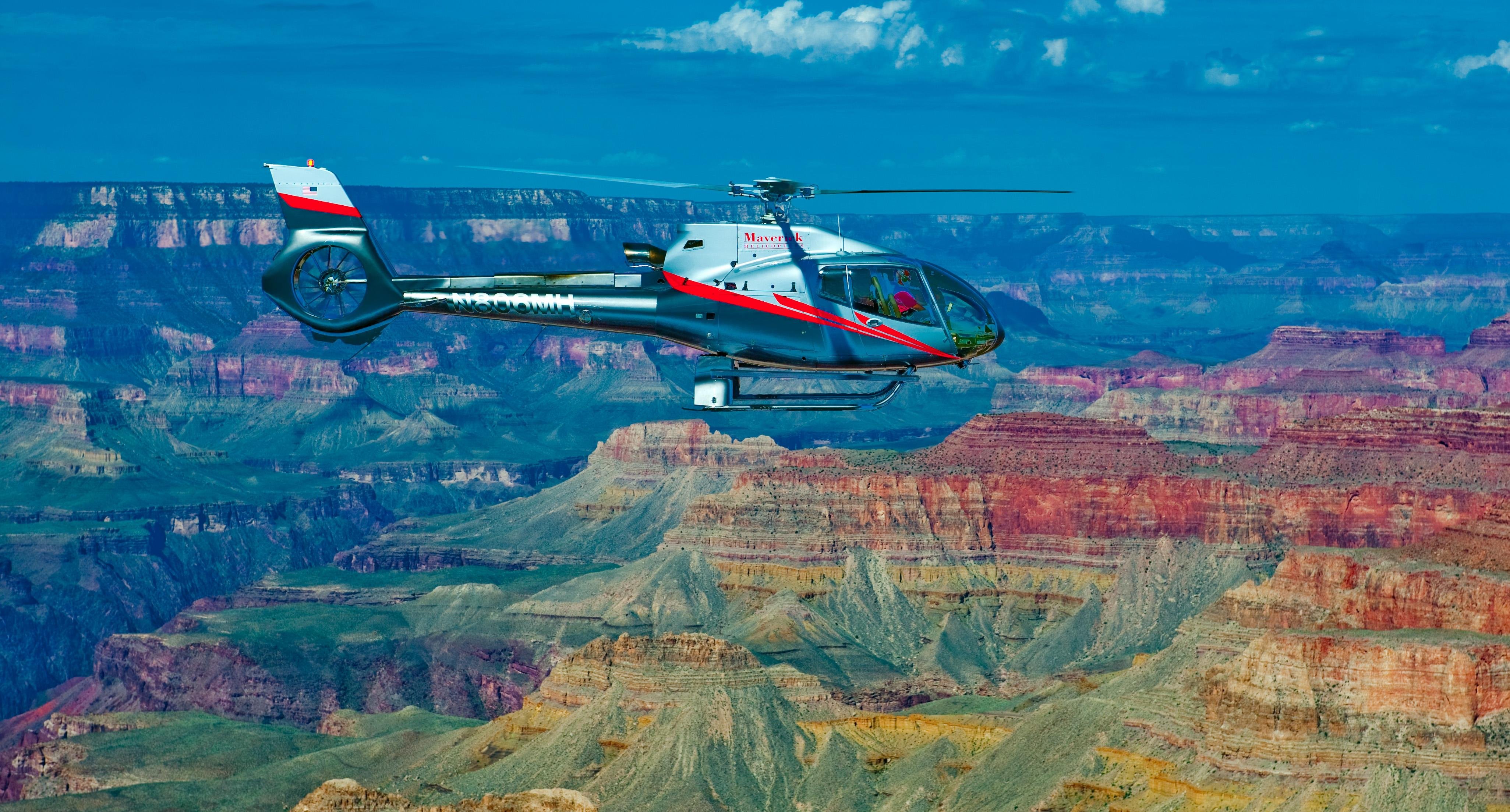
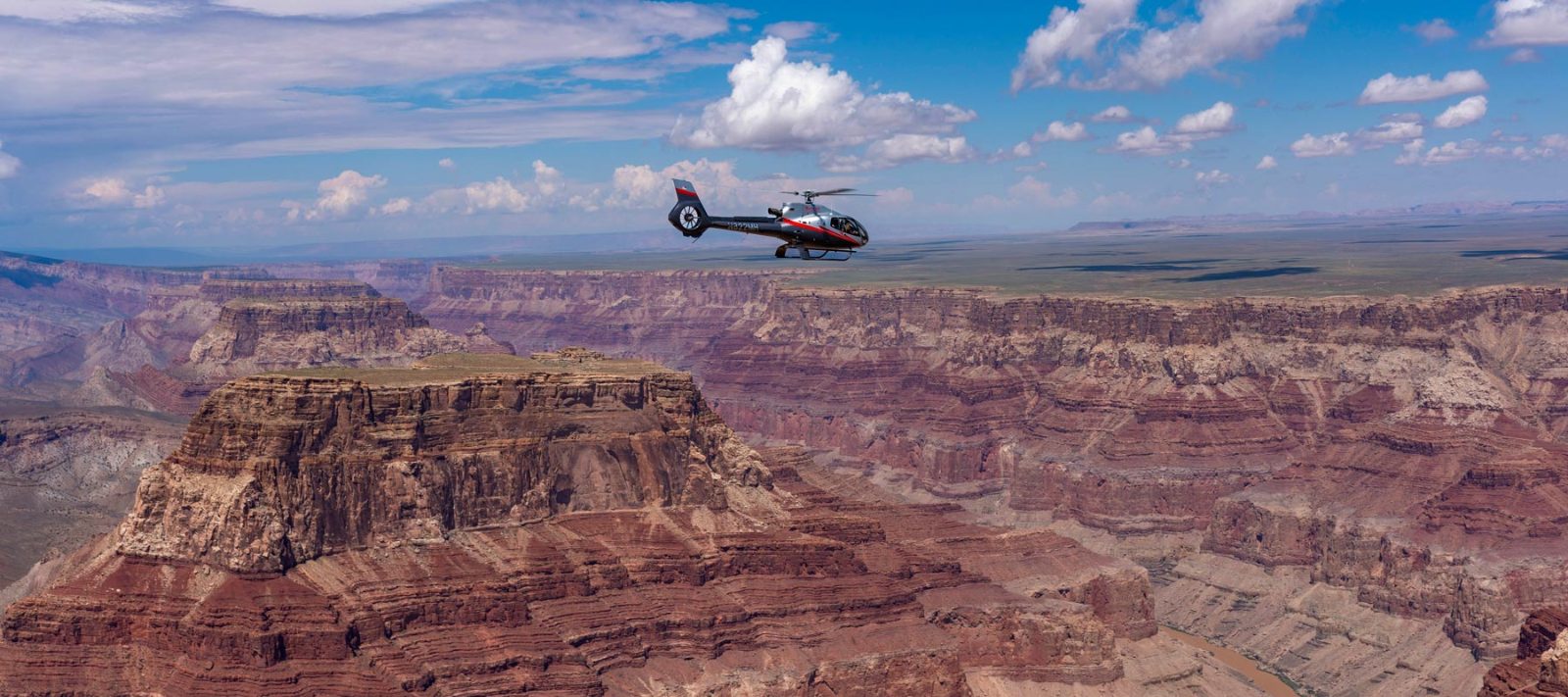
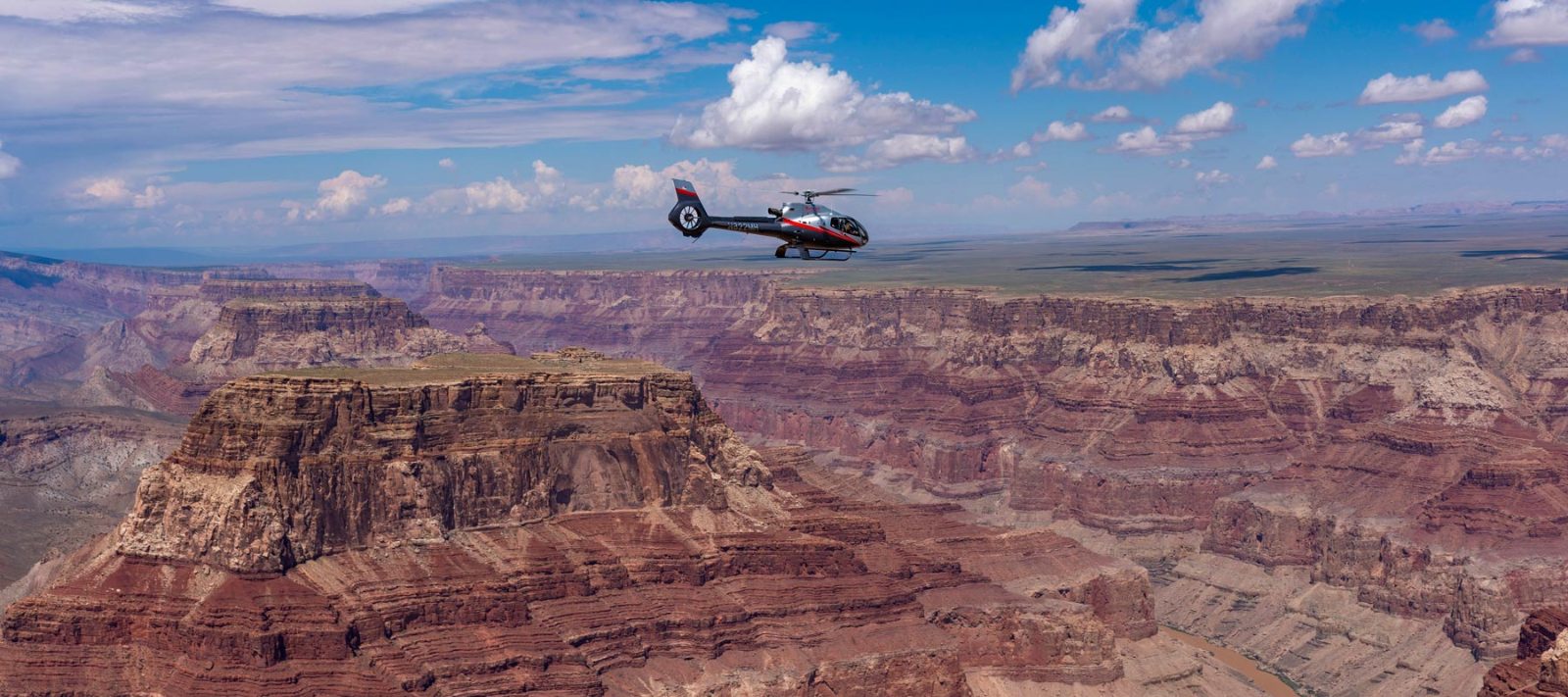
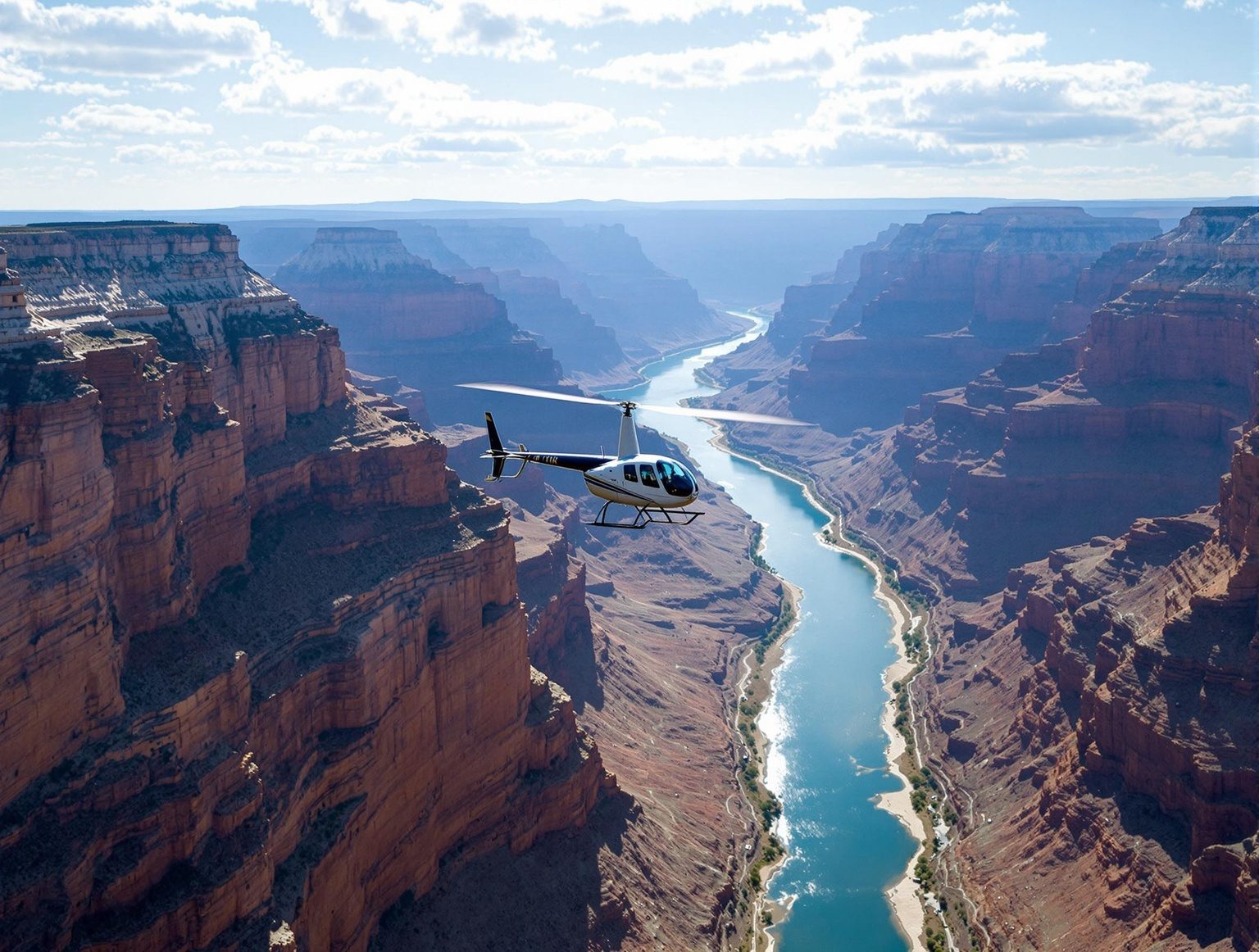
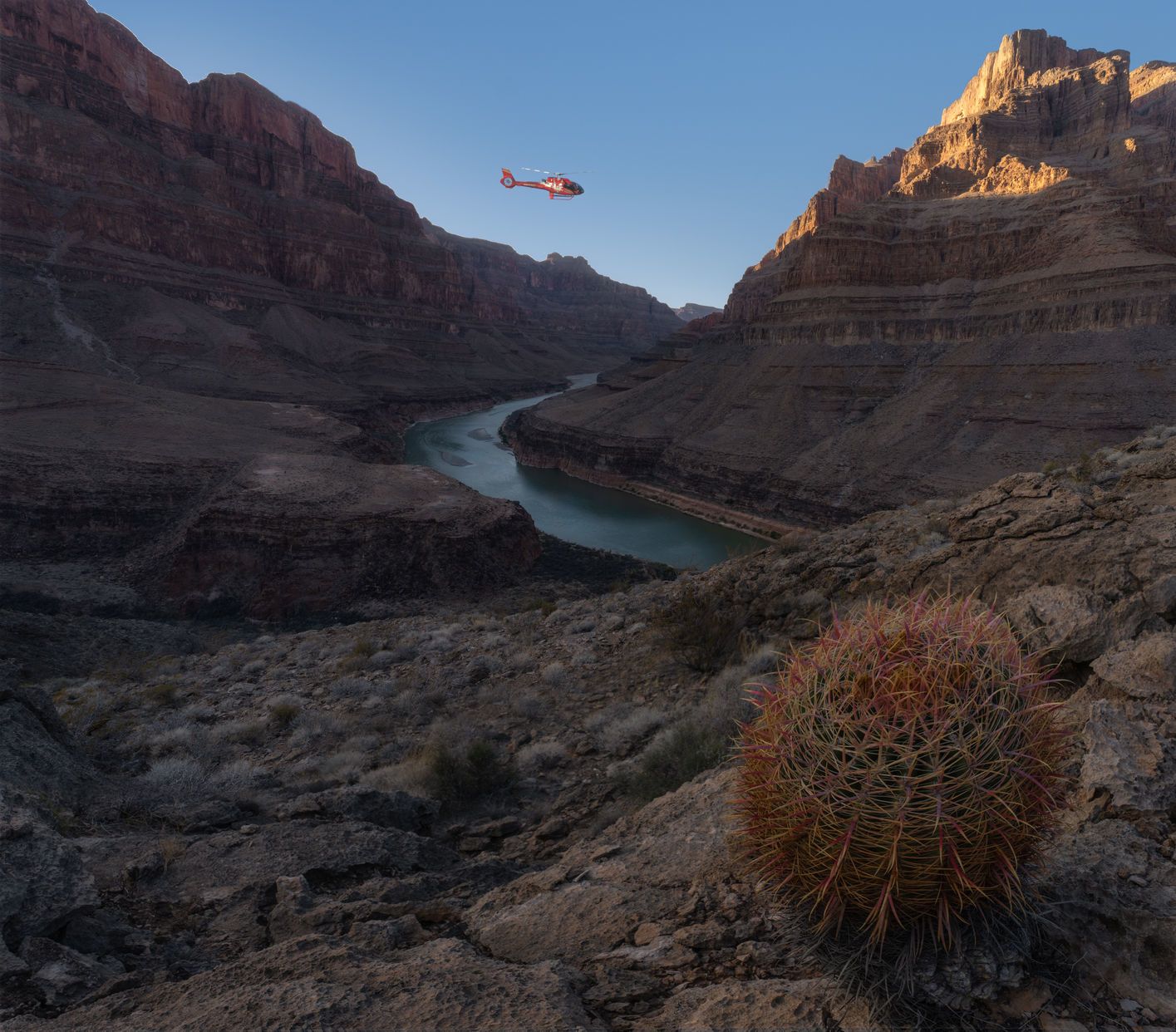
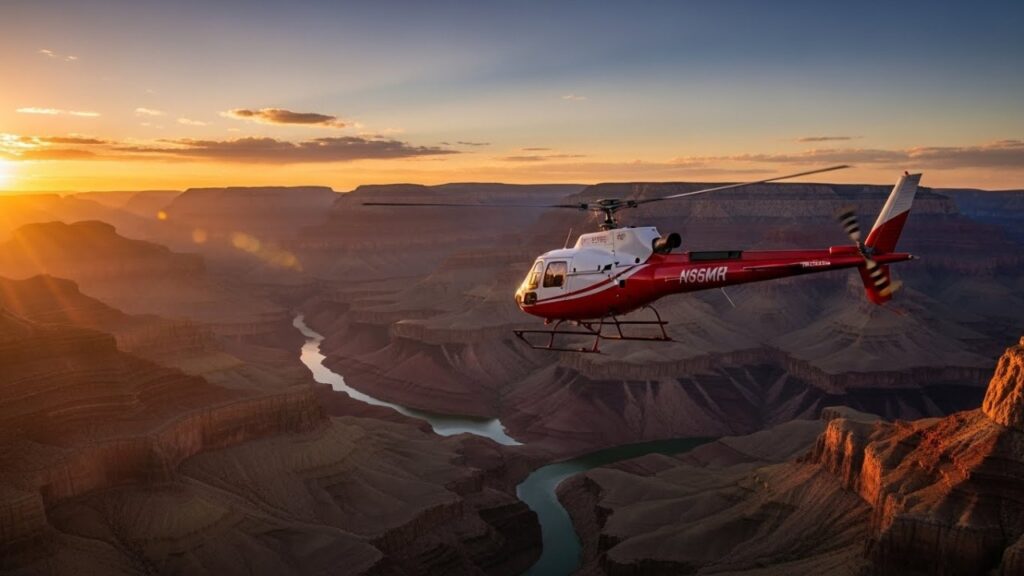
Board the ECO-Star helicopter and experience a rapid descent 3,500 feet below the rim, enjoying views of the Hualapai lands.
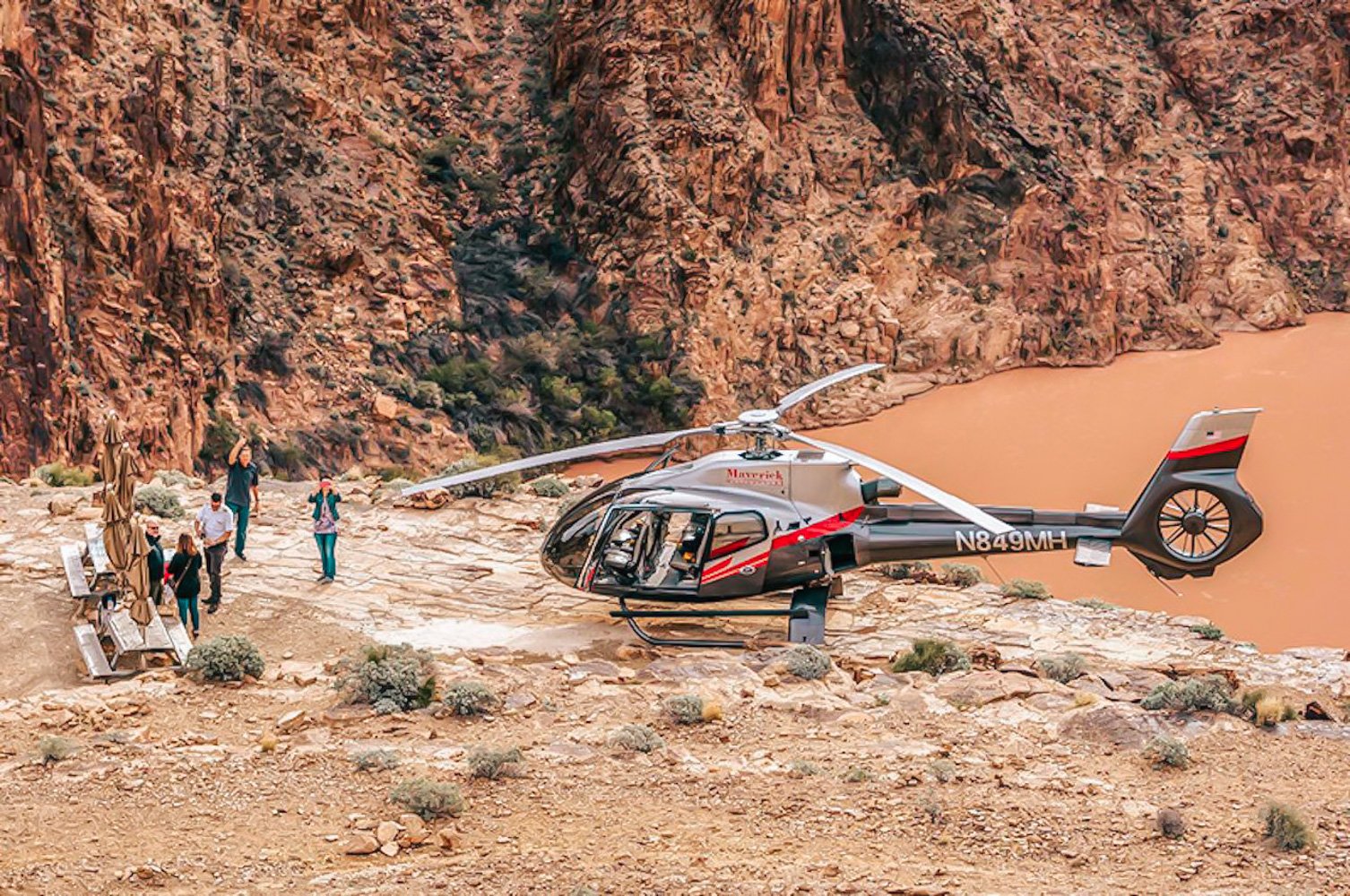
Touch down at the private heli-pad near the Colorado River, where you can walk along the rocky terrain and capture photos.
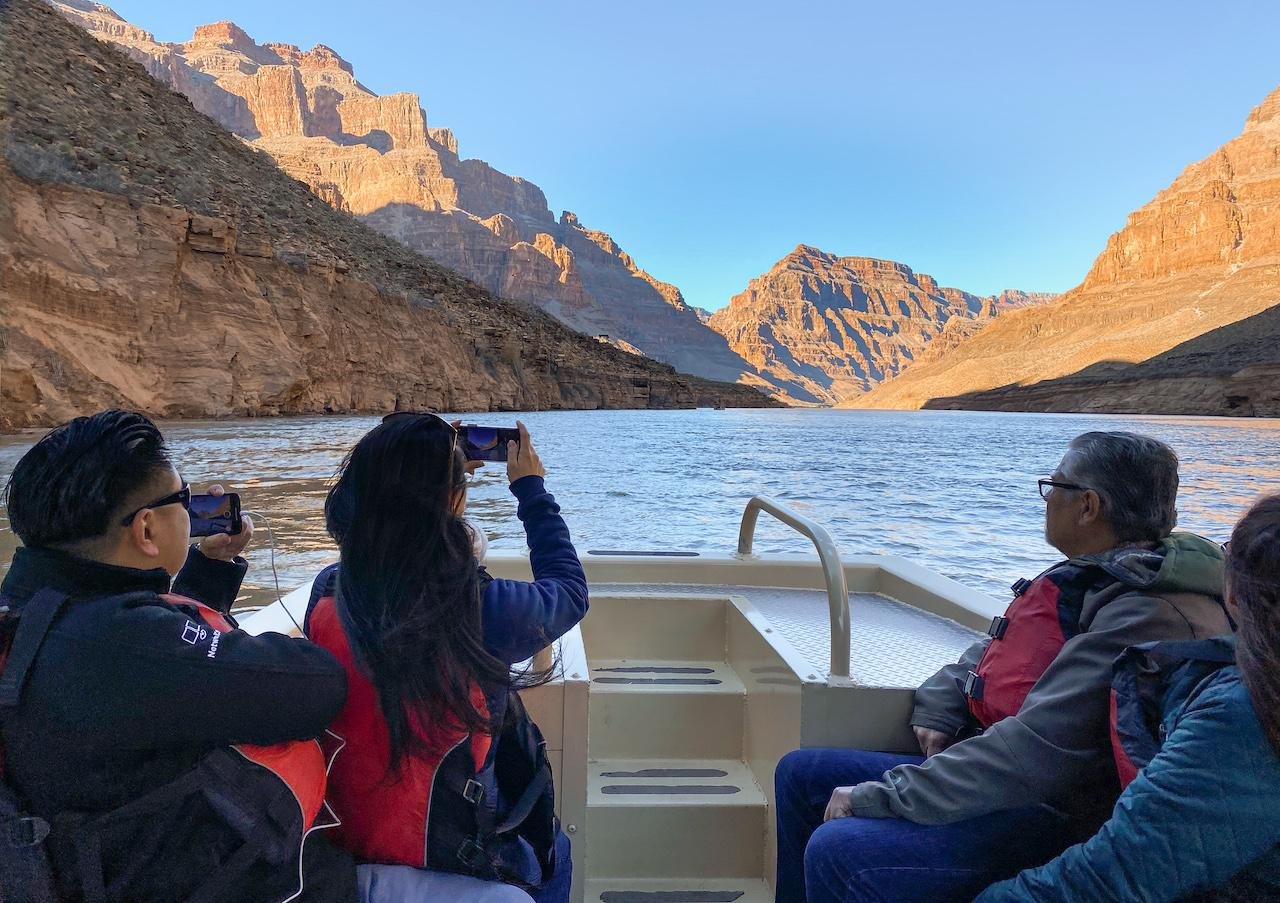
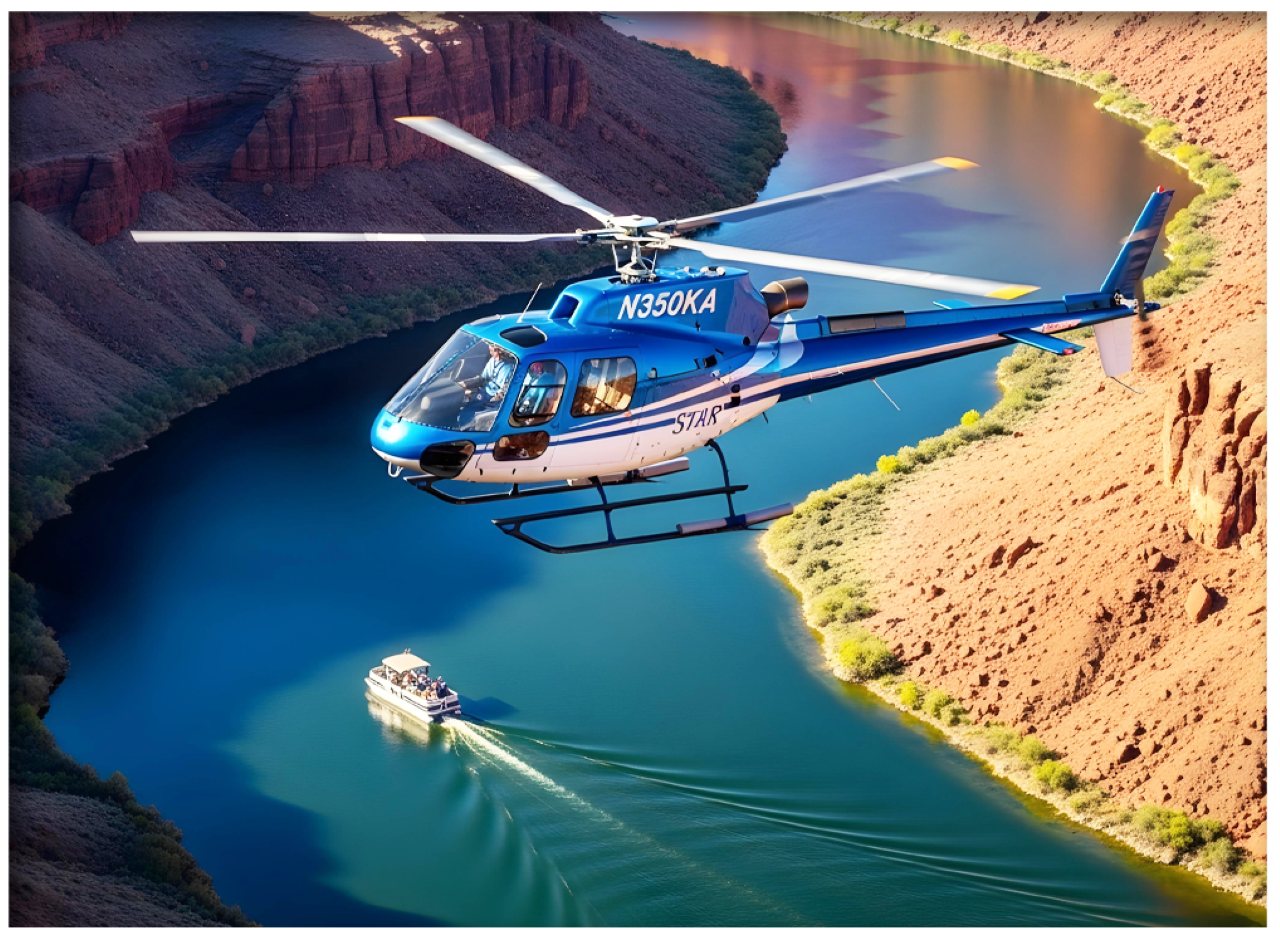
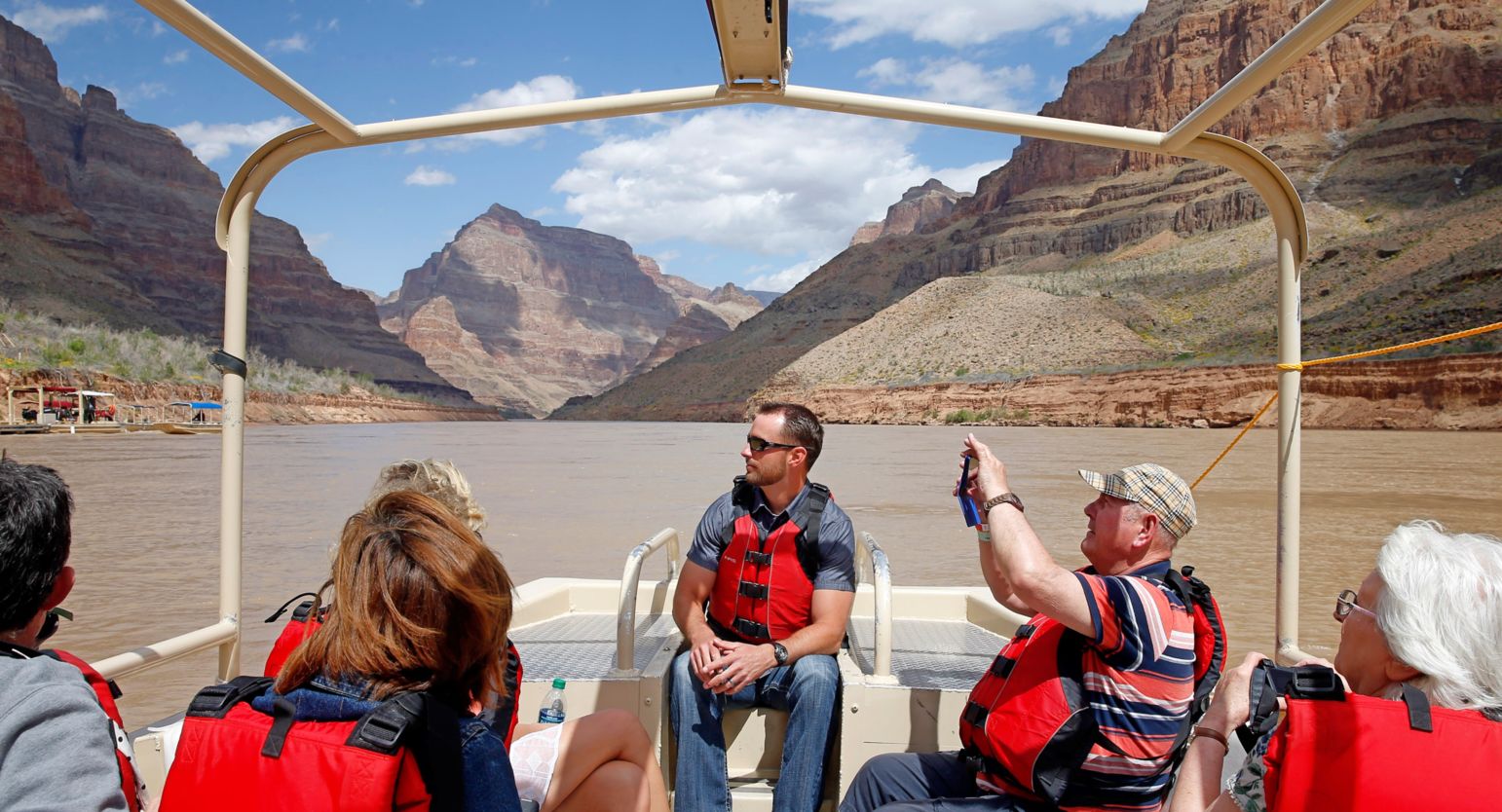
Board a pontoon boat for a calm river cruise between the massive canyon walls.
Ascend back to the West Rim heliport, experiencing a rapid climb past ancient rock formations.
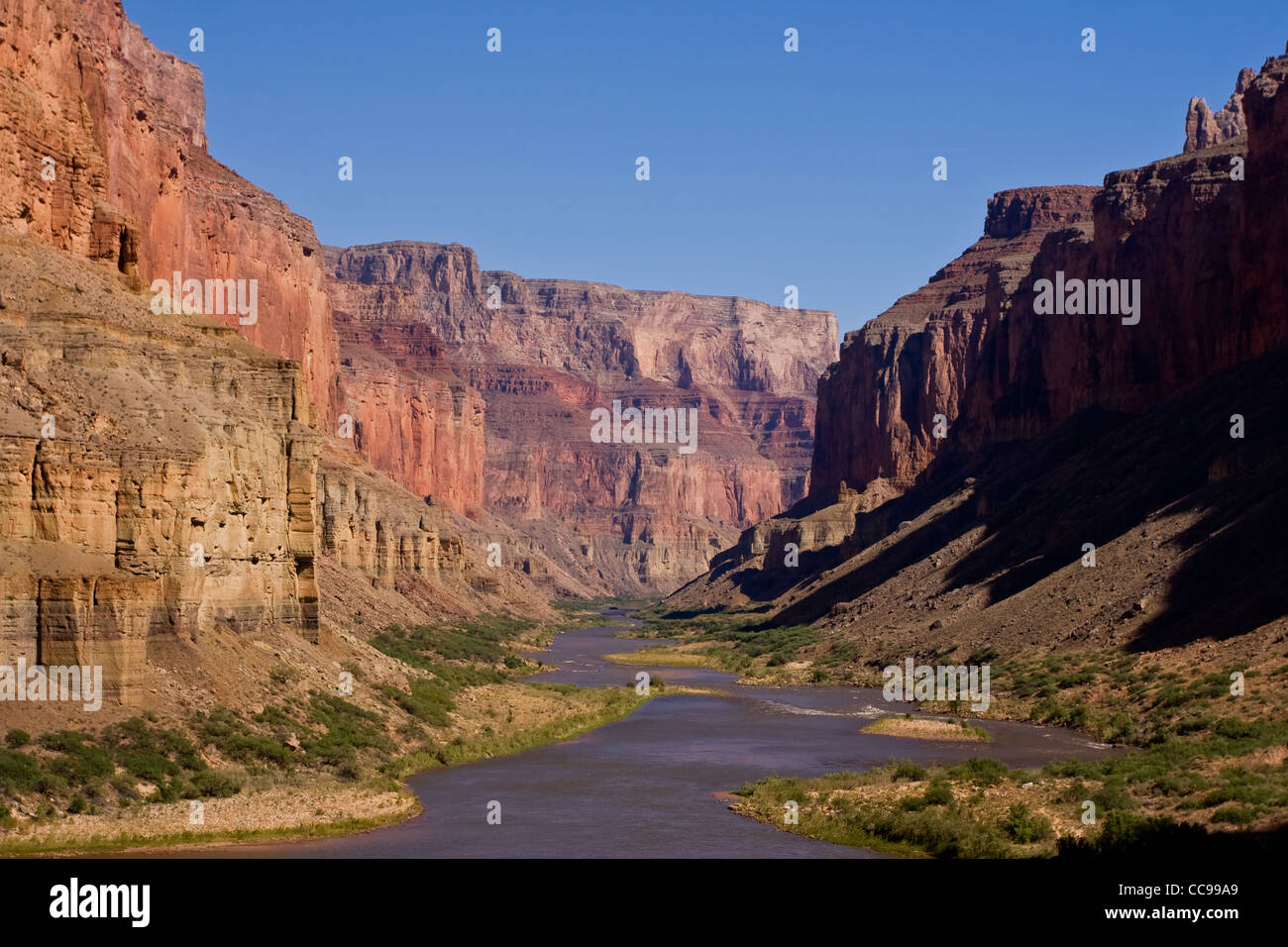
Walk along the edge of the Colorado River at the base of the canyon. The river flows through 1.7 billion-year-old metamorphic rock layers, offering a unique perspective of the towering canyon walls above.
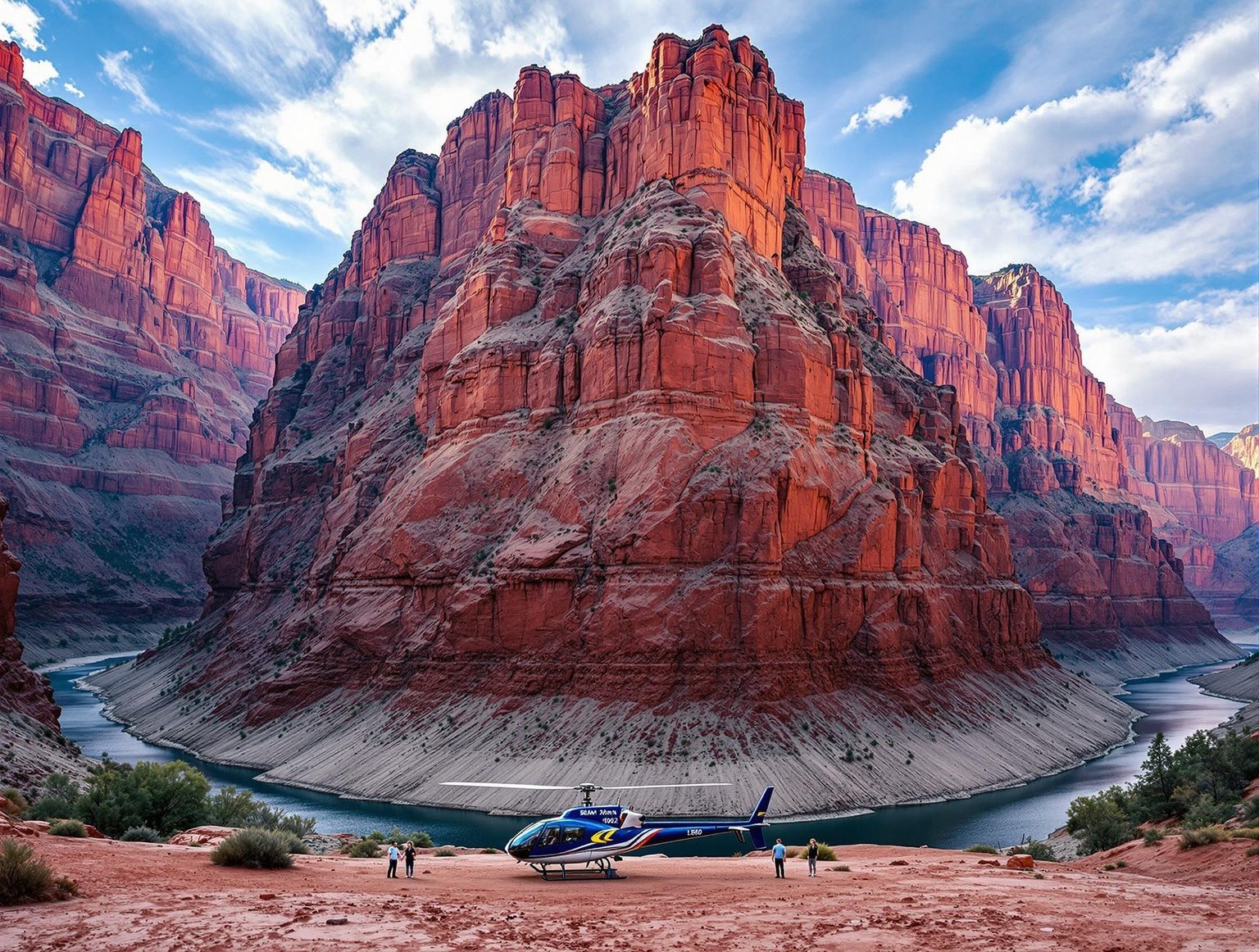
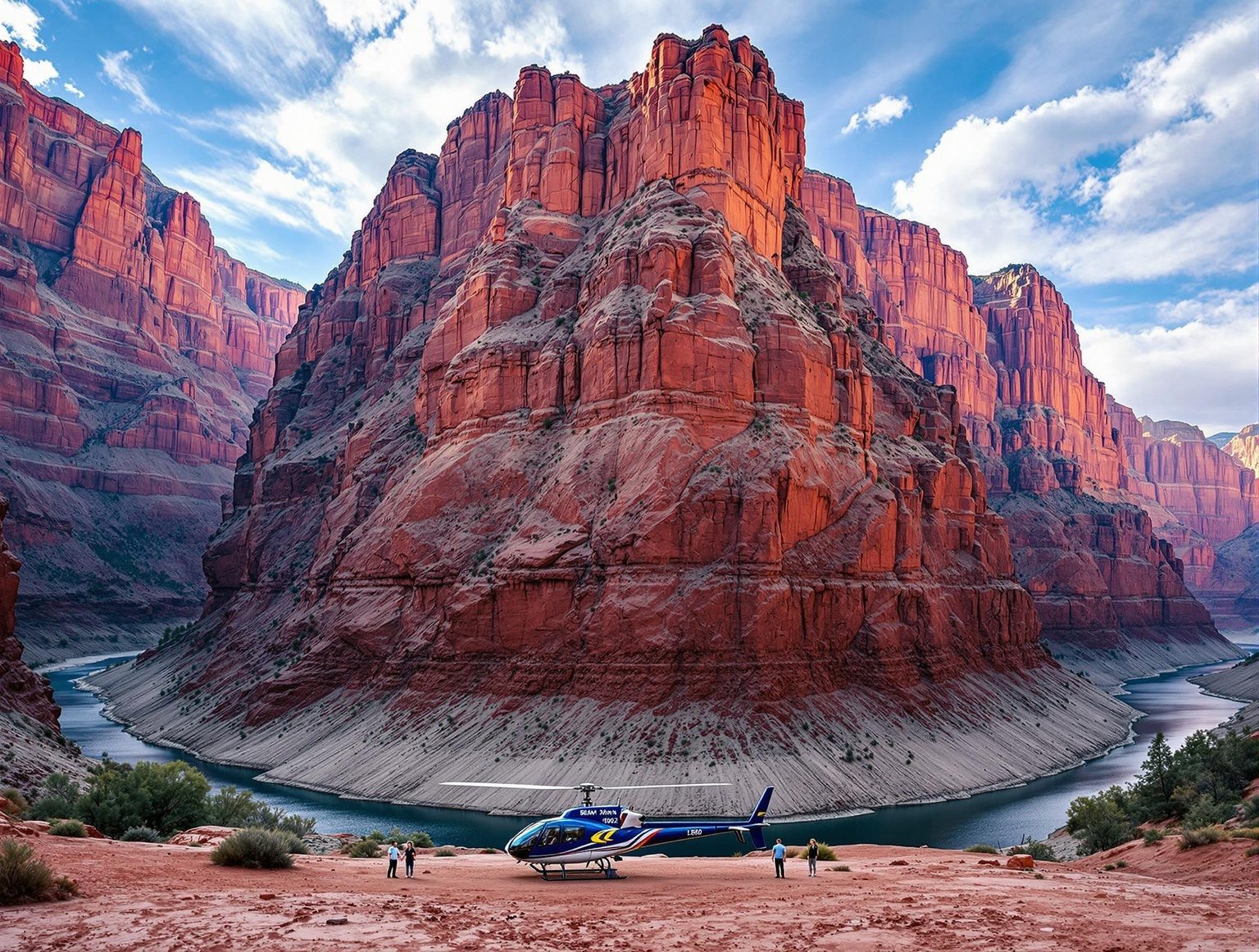
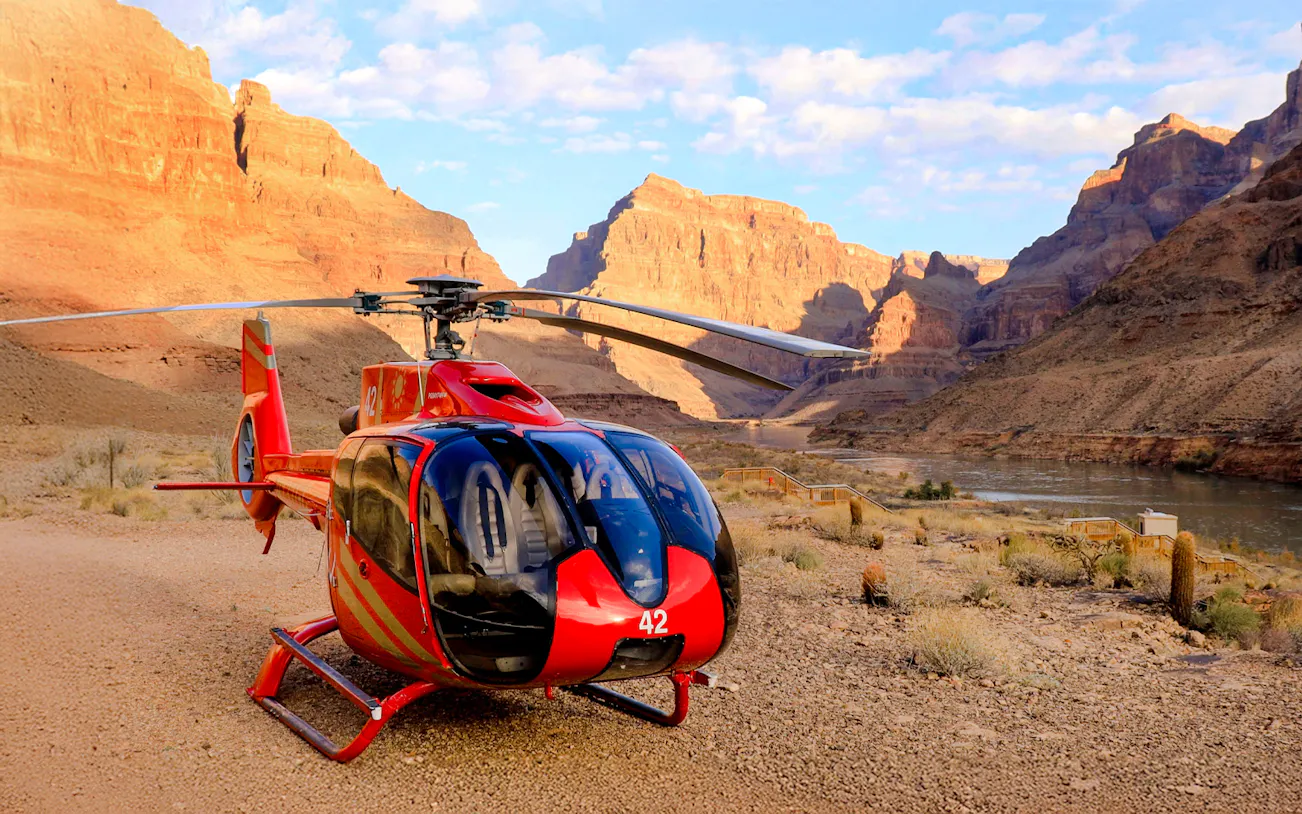
Land on a private, designated landing pad situated 3,500 feet below the rim. This exclusive landing zone provides immediate access to the rocky plateau and river shoreline.
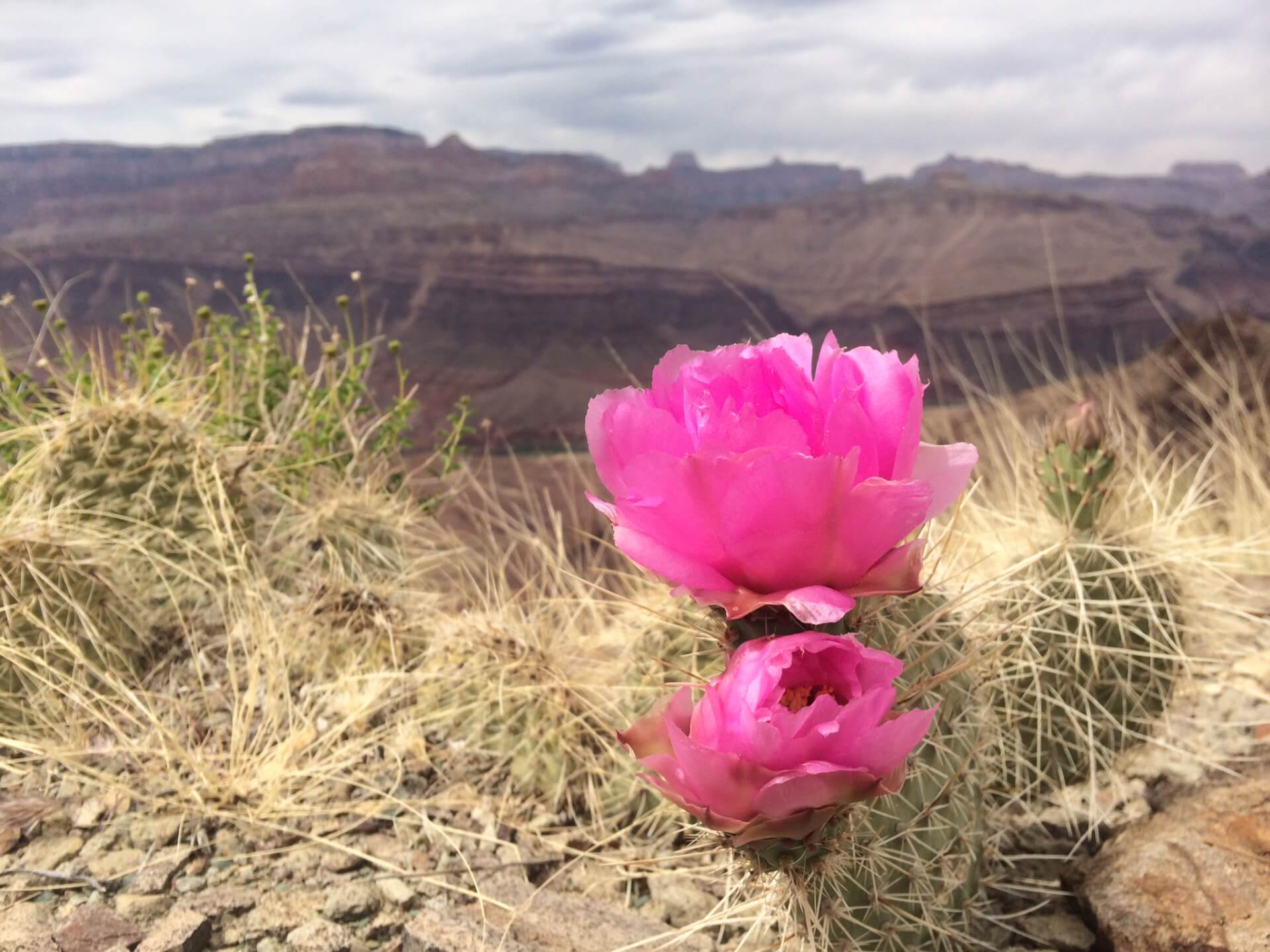
Explore the natural terrain preserved by the Hualapai Tribe for generations. The area features native desert flora such as brittlebush, barrel cactus, and ocotillo shrubs.
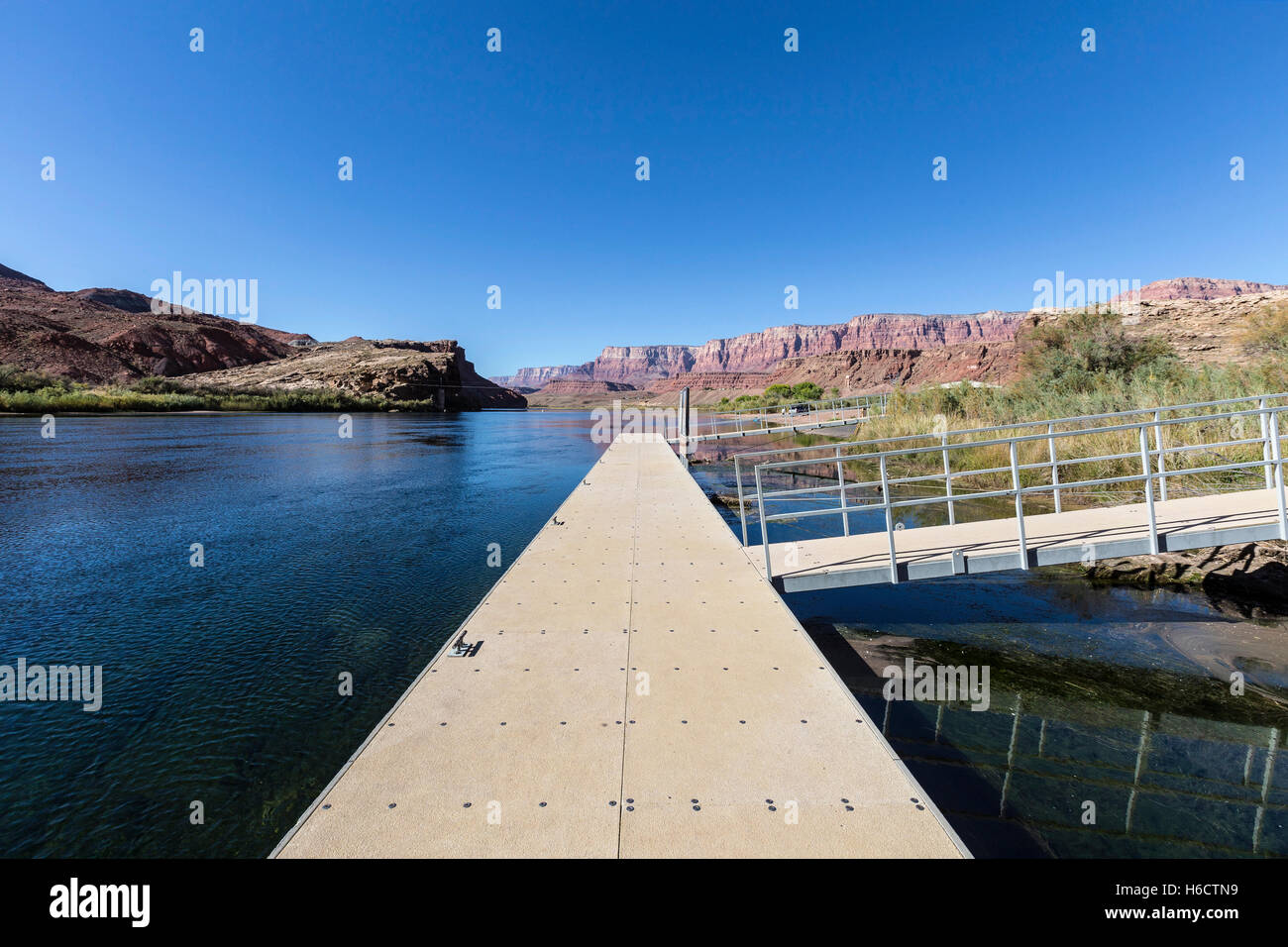
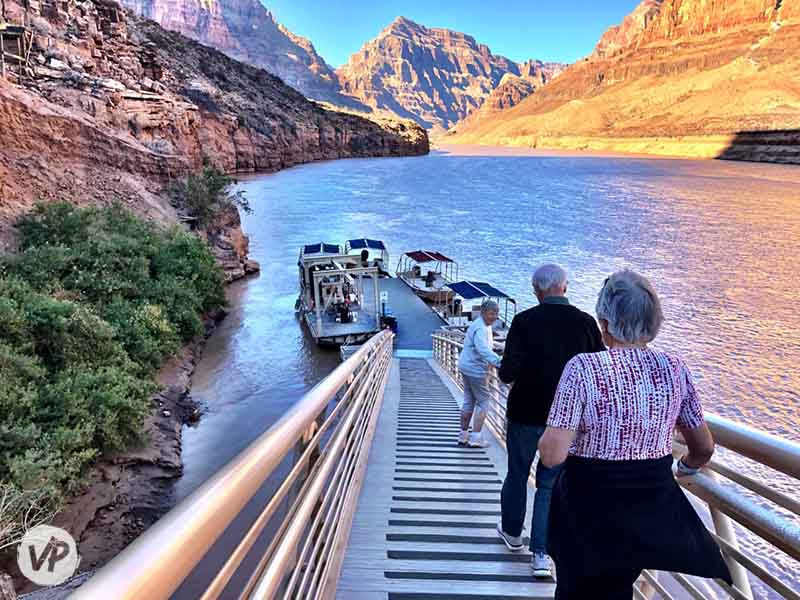
Board a river vessel from the floating wooden dock situated along the riverbank. The dock serves as the staging area for short, guided cruises along the calm waters.
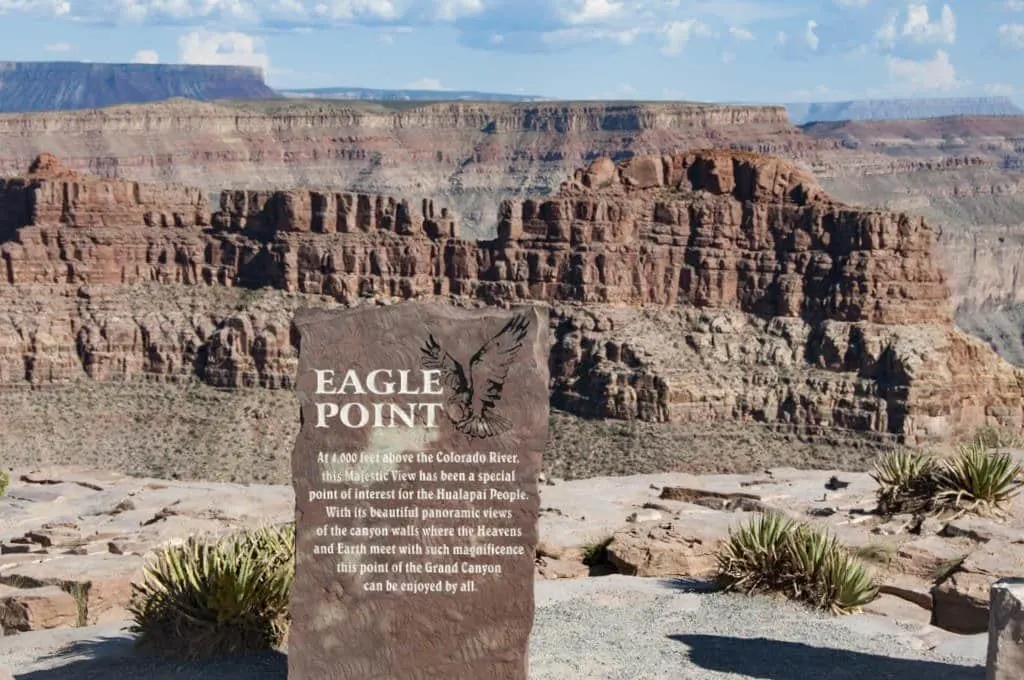
Observe the massive, naturally carved rock formation resembling an eagle spreading its wings. This geological feature holds deep spiritual significance for the Hualapai people.
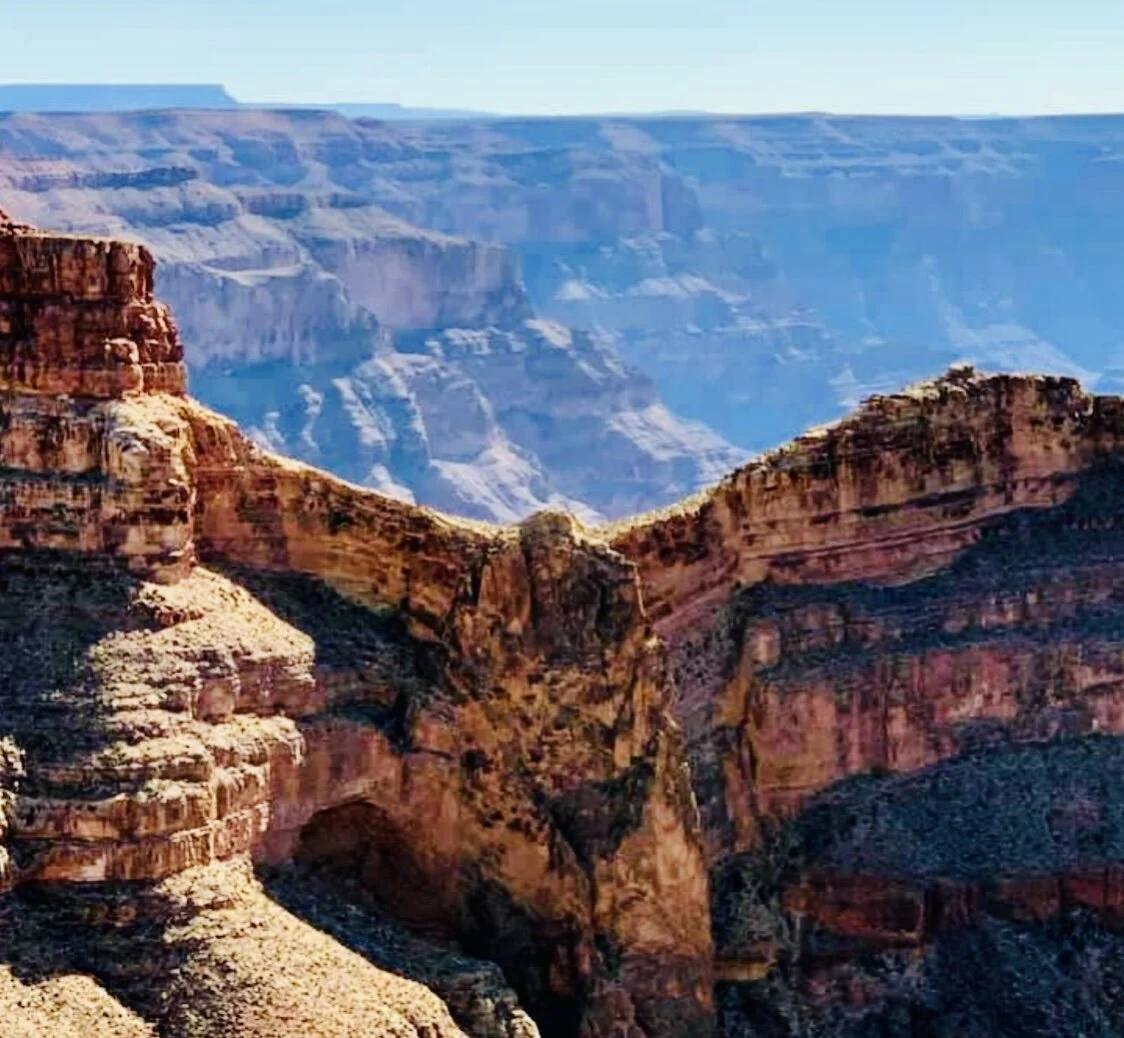
Witness the dramatic side chasm visible during your helicopter descent. This deep gorge showcases layers of Tapeats Sandstone and Bright Angel Shale.
You lift off from the West Rim helipad and the ground drops away in a single breath. Below, the plateau splits open, and the aircraft tips toward the gap. Your stomach registers the descent before your eyes do. The walls close in — rust, ochre, iron-grey — and the river turns from a thread to a moving band of green.
You feel the air change as you go down. It warms. The rotor noise flattens against the rock, then softens as the skids touch the canyon floor. When the engine winds down, the quiet is total, broken only by water and wind. You step onto sand that few people ever stand on, thousands of feet beneath the rim you photographed an hour before.
You walk a short way to the water's edge. You touch the Colorado, colder than you expect. A grand canyon helicopter tour to bottom tour gives you this: the scale reversed, the sky reduced to a strip of blue overhead. Some flights pair the landing with a Hummer run or a pontoon float, and a West Rim helicopter flight can loop the Las Vegas Strip on the way back. You climb back aboard. The lift-off pins you to your seat, the floor falls behind, and the rim rises to meet you again.
All the details about your upcoming adventure in one place
The Colorado River has spent roughly six million years cutting the Grand Canyon a mile into the Colorado Plateau. For most of that time, the canyon floor stayed unreachable to all but river runners and mule trains. Helicopters changed the arithmetic of descent.
A grand canyon helicopter tour to bottom now covers in minutes a drop that once cost hikers a full day of switchbacks.
Most landings happen on the West Rim, on land held by the Hualapai Tribe. The tribe opened Grand Canyon West to visitors in the late twentieth century, and the aircraft that ferry passengers below the rim operate under agreements with the Hualapai and federal aviation rules. The descent threads past exposed rock: dark Vishnu schist at the base, bands of Tapeats sandstone and Redwall limestone stacked above it, a vertical record of deep time written in stone.
The canyon here is younger in reputation than the South Rim, but the geology runs just as far back. At the bottom, the river moves green and cold between walls that rise thousands of feet. Rafts and pontoon boats trace the water. Grand canyon helicopter tour to bottom tours reveal what flat maps cannot — the sheer scale of the escarpment, the way side canyons braid into the main gorge.
The West Rim sits within the wider theme of Grand Canyon landmarks, near the glass Skywalk that cantilevers over Eagle Point. Yet the floor itself remains the draw. Few visitors expect the quiet that settles once the rotor stops and the aircraft rests on the sand near the Colorado.
Aviation into the canyon carries its own history. Scenic flights over the region date to the 1920s, and the airspace above the gorge is among the most tightly managed in the country after decades of refinement. A West Rim helicopter flight follows fixed corridors, and altitudes are dictated rather than chosen. The result is a controlled route that still delivers the raw dimensions of the place.
For travellers weighing grand canyon helicopter tour to bottom tickets, the appeal is plain in the landscape rather than any brochure. The bottom is a different country from the rim: warmer, narrower, louder with moving water. It is the one vantage that hikers, river guides and pilots agree changes how a person understands the canyon. The rock does the talking, and it has been talking for six million years.
The bottom is a different country from the rim: warmer, narrower, louder with moving water.
For a Grand Canyon helicopter tour to bottom, wear comfortable, weather-appropriate clothing and closed-toe shoes. Layered clothing is recommended as temperatures can vary between the rim and the canyon floor. Avoid wearing loose hats or scarves that could be blown away by rotor wash.
Security protocols restrict heavy luggage on a Grand Canyon helicopter tour to bottom due to strict aircraft weight limitations. Only small personal items, diaper bags, or medical supplies are allowed after passing through the main metal detectors at the terminal. Free storage options are not guaranteed on-site.
Taking photos on your Grand Canyon helicopter tour to bottom is highly encouraged, but always secure your camera straps. Drones are strictly prohibited across the Hualapai Reservation. Ensure your devices are set to airplane mode during the flight to avoid interference.
Families joining a Grand Canyon helicopter tour to bottom must ensure children are accompanied by adults at all times. Children under two years of age typically fly as lap children, while older children require their own seat. Infant ear protection is highly recommended.
The passenger terminal and shuttle buses are wheelchair accessible. However, descending to the canyon floor via helicopter and boarding the pontoon boats requires steps and physical mobility. Passengers with limited mobility should contact the operator in advance to arrange boarding assistance.
No food or drinks are allowed on the aircraft, except for bottled water. Dining options, including quick-service meals, are available at Eagle Point, Guano Point, and the main terminal. Keep all trash secured to protect local wildlife.
Moderate crowds
Peak traffic day
Opening Hours
08:00–18:00
Address
5001 East Diamond Bar Road, Peach Springs, AZ 86434
Best Arrival Window
08:00–10:00
Bags and Security
Small personal bags only
Entrance Fee
67 USD (General Admission to Grand Canyon West, including shuttle service)
Car · 2 hours from Las Vegas · Free parking
If you drive yourself to the terminal for a Grand Canyon helicopter tour to bottom tour, use Mohave County Route 25 to reach the heliport. Free parking is available at the main terminal lot.
Public transport · 2.5 hours from Las Vegas · Varies by operator
There is no direct public bus service to Grand Canyon West. Visitors must book commercial shuttle tours departing daily from the Las Vegas Strip.
When booking a Grand Canyon helicopter tour to bottom, cancellations made at least 24 hours prior to the scheduled flight receive a full refund. Note that the 67 USD General Admission to Grand Canyon West is subject to separate non-refundable terms once purchased.
Recommended time
3–5 hours
Opting for a grand canyon helicopter tour to bottom tour departing from Las Vegas requires about four to five hours total, including hotel transport. This option includes the flight to the West Rim, a brief descent, and a ground landing near the Colorado River. If you prefer departing directly from the local airfield, booking a grand canyon helicopter tour to bottom cuts down the travel time significantly. Morning flights departing between 08:00 and 10:00 provide the smoothest flight paths, minimizing desert air turbulence caused by midday heat. Keep in mind that purchasing grand canyon helicopter tour to bottom tickets for afternoon slots means you might encounter stronger wind conditions. This Grand Canyon West tour to the canyon floor offers unmatched canyon perspectives before you return to the terminal. When comparing various grand canyon helicopter tour to bottom tours, prioritize early departures to ensure a comfortable ride.
Crowd levels through the day
Weather · crowds · average price — dots go green to amber to red as each metric rises.
Spring temperatures range from 60 to 80 degrees Fahrenheit, making it the most comfortable season for outdoor exploration. Flower blooms appear on desert plants, and crowds are moderate before the summer rush.
Summer temperatures frequently exceed 100 degrees Fahrenheit on the canyon floor, which can cause flight delays due to high thermal drafts. Morning flights are highly recommended to avoid the peak heat and afternoon wind turbulence.
Autumn offers mild temperatures between 70 and 85 degrees Fahrenheit, along with clear skies and calm flying conditions. This is a popular season for visitors seeking pleasant weather, so flights sell out quickly.
Winter brings cooler weather with temperatures between 40 and 60 degrees Fahrenheit, and occasional snow on the canyon rim. Helicopter flights operate daily but are subject to winter storm delays.
Book your Grand Canyon helicopter tour to bottom in advance to secure preferred departure times, especially during peak seasons.
During the Hualapai land heli-landing, expect rocky, uneven terrain. Wear sturdy shoes to walk safely from the pad.
High winds or extreme heat can cause temporary flight delays. Keep your schedule flexible on the day of your flight.
All passengers aged 18 and older must present a valid government-issued photo ID during check-in.
Remember that a separate 67 USD general admission ticket to Grand Canyon West is required for entry to the tribal land.
The desert climate is extremely dry. Bring bottled water and drink regularly throughout your visit to prevent dehydration.
5001 East Diamond Bar Road, Peach Springs, AZ 86434
Arrive 45 minutes prior to your scheduled flight time with a valid photo ID.
Get directionsThe descent begins with the Hualapai Tribe. Their reservation was established in 1883 along the canyon's western rim. The reservation covered nearly a million acres of high desert. For a century the land drew few outsiders. That changed in 1988, when the tribe opened Grand Canyon West to visitors. The timing was decisive. The National Parks Overflights Act of 1987 restricted below-rim flying inside the national park. Hualapai land became the one corridor where a grand canyon helicopter tour to bottom could lawfully reach the Colorado River. Infrastructure followed the ambition. In March 2007 the glass Skywalk opened at Eagle Point, built from a concept by Las Vegas businessman David Jin. Aircraft soon paired with water. Helicopters dropped travelers some 4,000 feet to the river bed. Pontoon boats carried them along the Colorado. Commercial operators anchored their landing rights on this ground. The grand canyon helicopter tour to bottom tour hardened into a fixed sequence of flight, landing, and float. Controversy shadowed the flights. Through the 1990s environmental groups contested aircraft noise over the gorge. The tribe defended the routes as an economic lifeline for the reservation. Federal noise-management reviews were negotiated more than once. By the 2010s the canyon-floor helicopter flights had become the region's signature offering. Securing grand canyon helicopter tour to bottom tickets turned into the practical gateway to the river itself. Little of that architecture has been lost. Guano Point and Eagle Point still frame the rim above the landing zones. The Skywalk still cantilevers over the void, as it has since 2007. The route endures largely as first conceived. The grand canyon helicopter tour to bottom tours booked today descend along the same corridor the Hualapai opened in 1988, where the national park itself forbids the drop.
The Hualapai Reservation is established along the canyon's western reaches.
The National Parks Overflights Act restricts below-rim flying inside the national park.
The Hualapai Tribe opens Grand Canyon West to visitors.
The glass Skywalk opens at Eagle Point from David Jin's design.
Helicopter-and-pontoon descents to the Colorado become the region's signature route.
Grand Canyon West continues to run the below-rim flights the national park forbids.
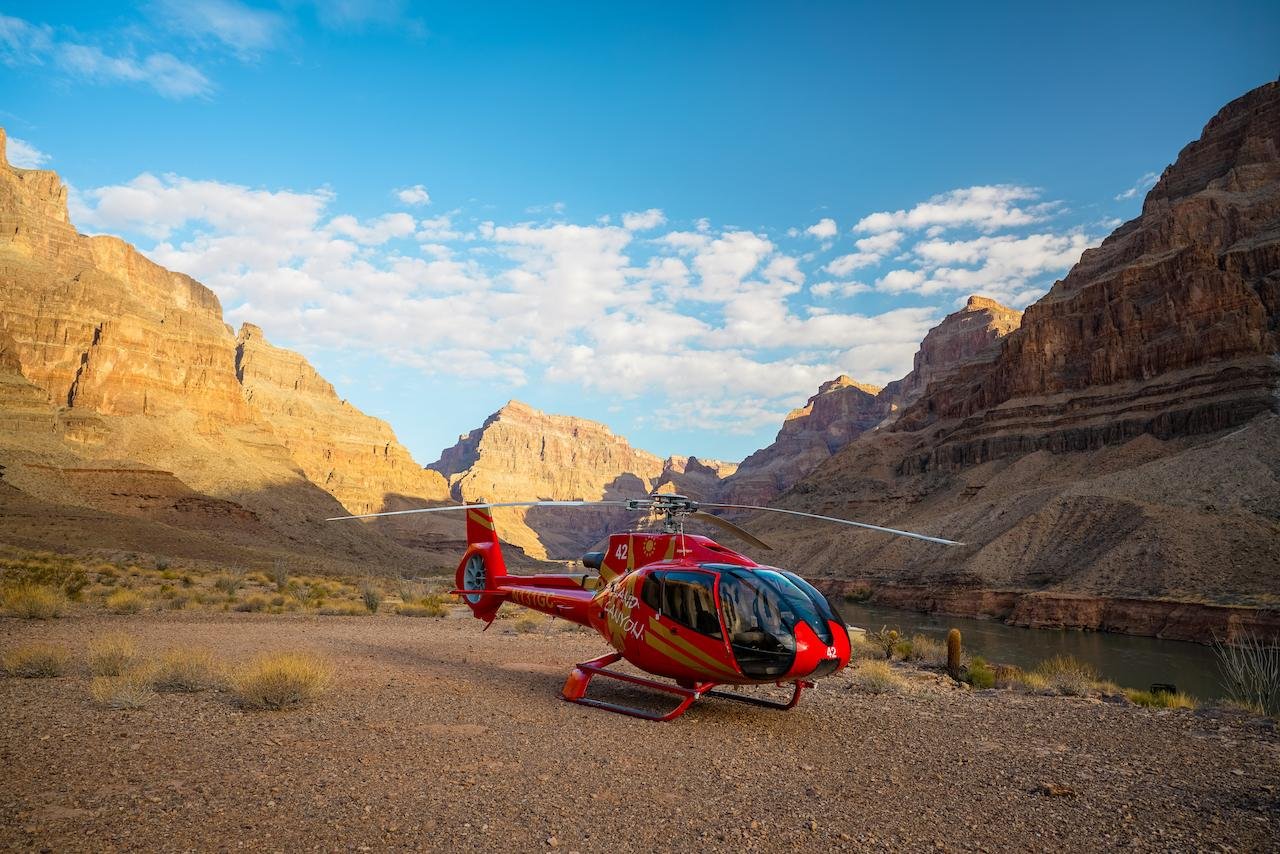
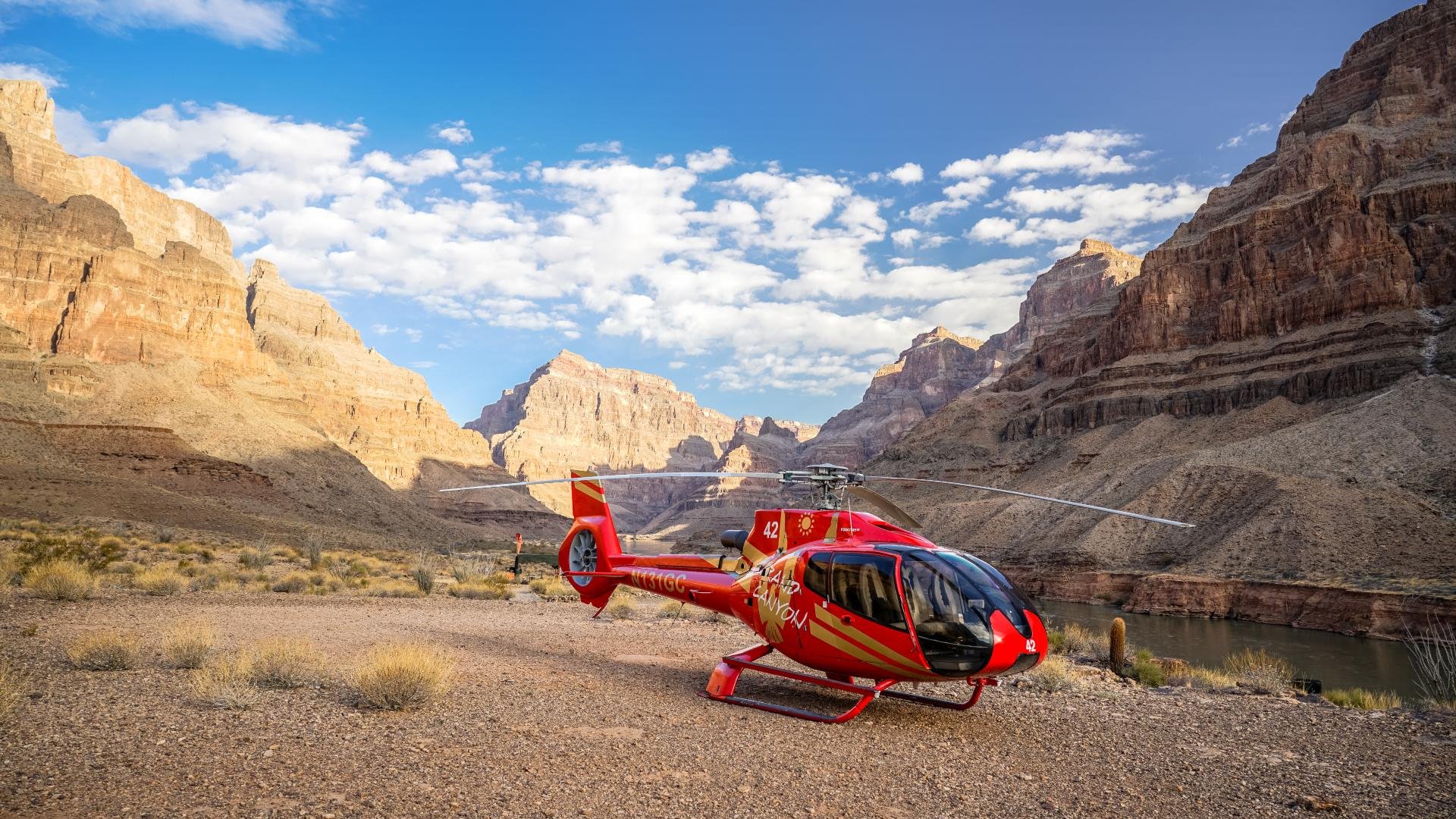
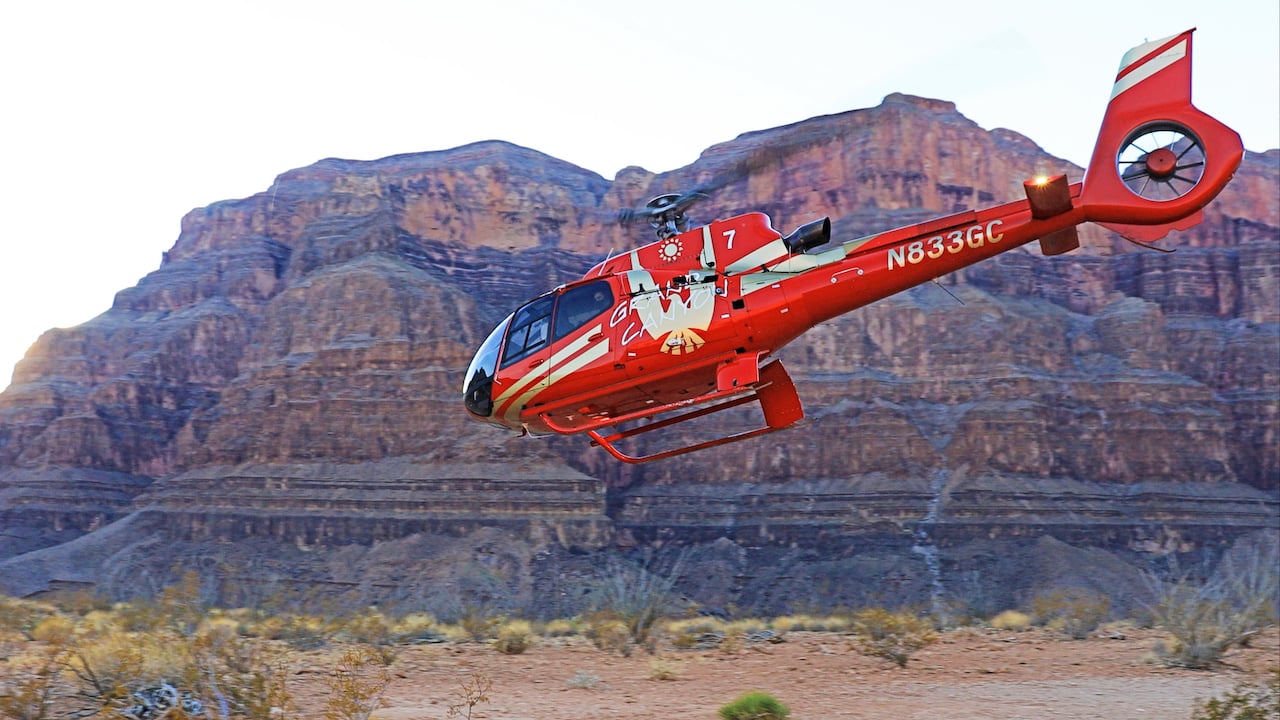
Stand on the designated landing pad looking up at the towering rock faces rising 3,500 feet above you. This private landing site on the Hualapai Reservation is the highlight of a grand canyon helicopter tour to bottom. Capture the helicopters parked against the red rock backdrop.
Position yourself at the edge of the floating metal dock where the river waters brush against the landing area. Many grand canyon helicopter tour to bottom tours include this boarding point, offering a perspective of the sheer canyon walls. Look upward to capture the contrast between the green water and the massive cliffs.
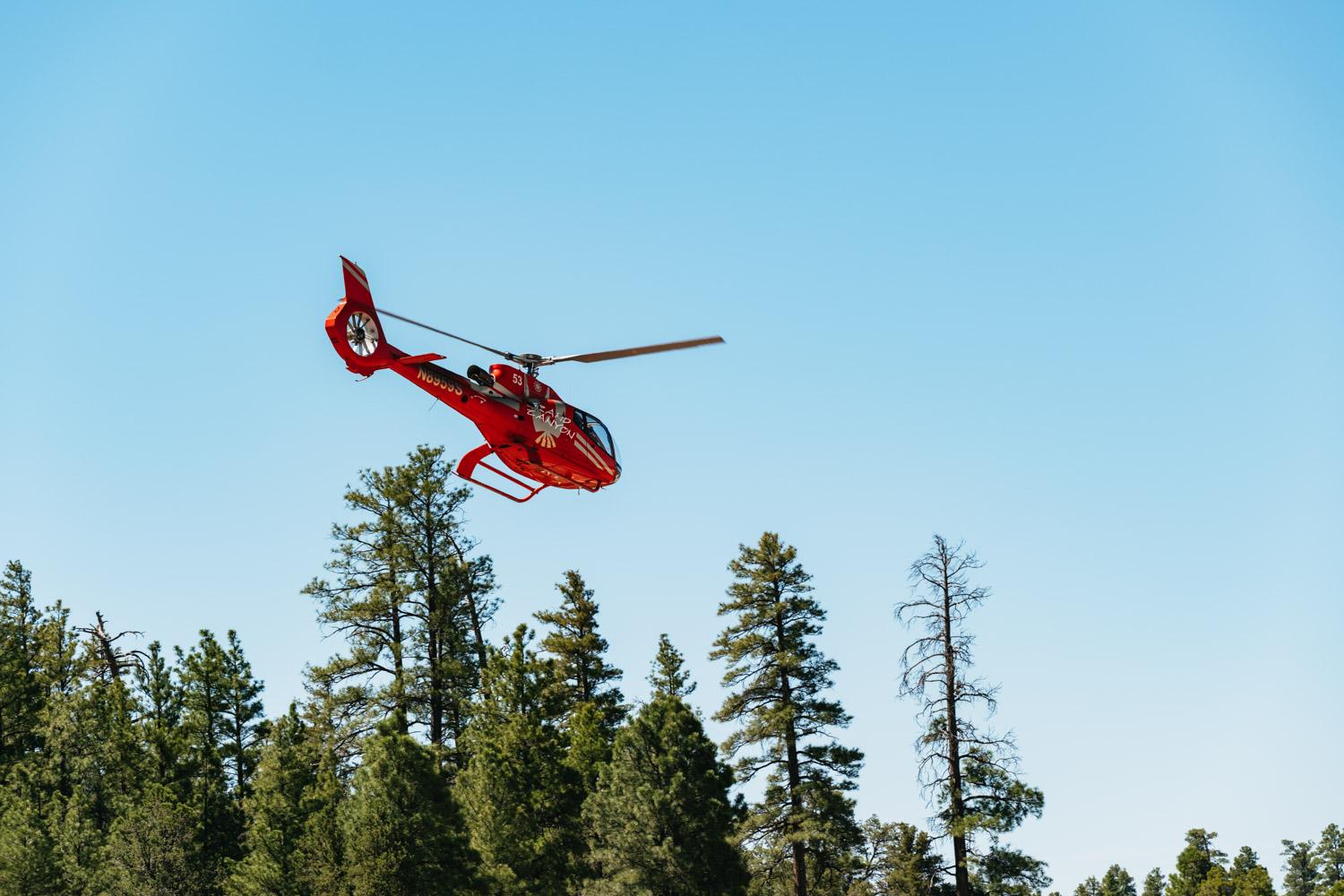
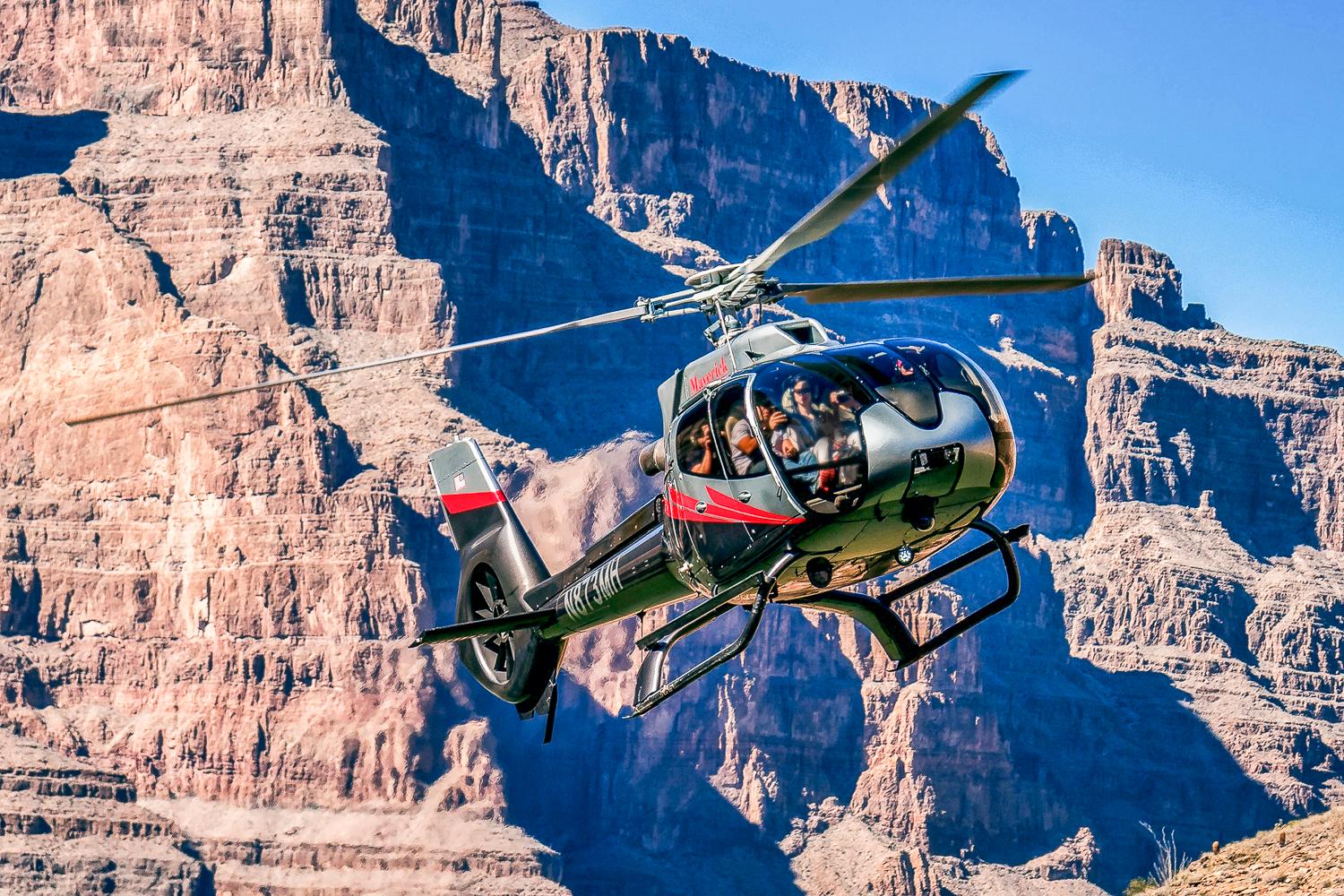
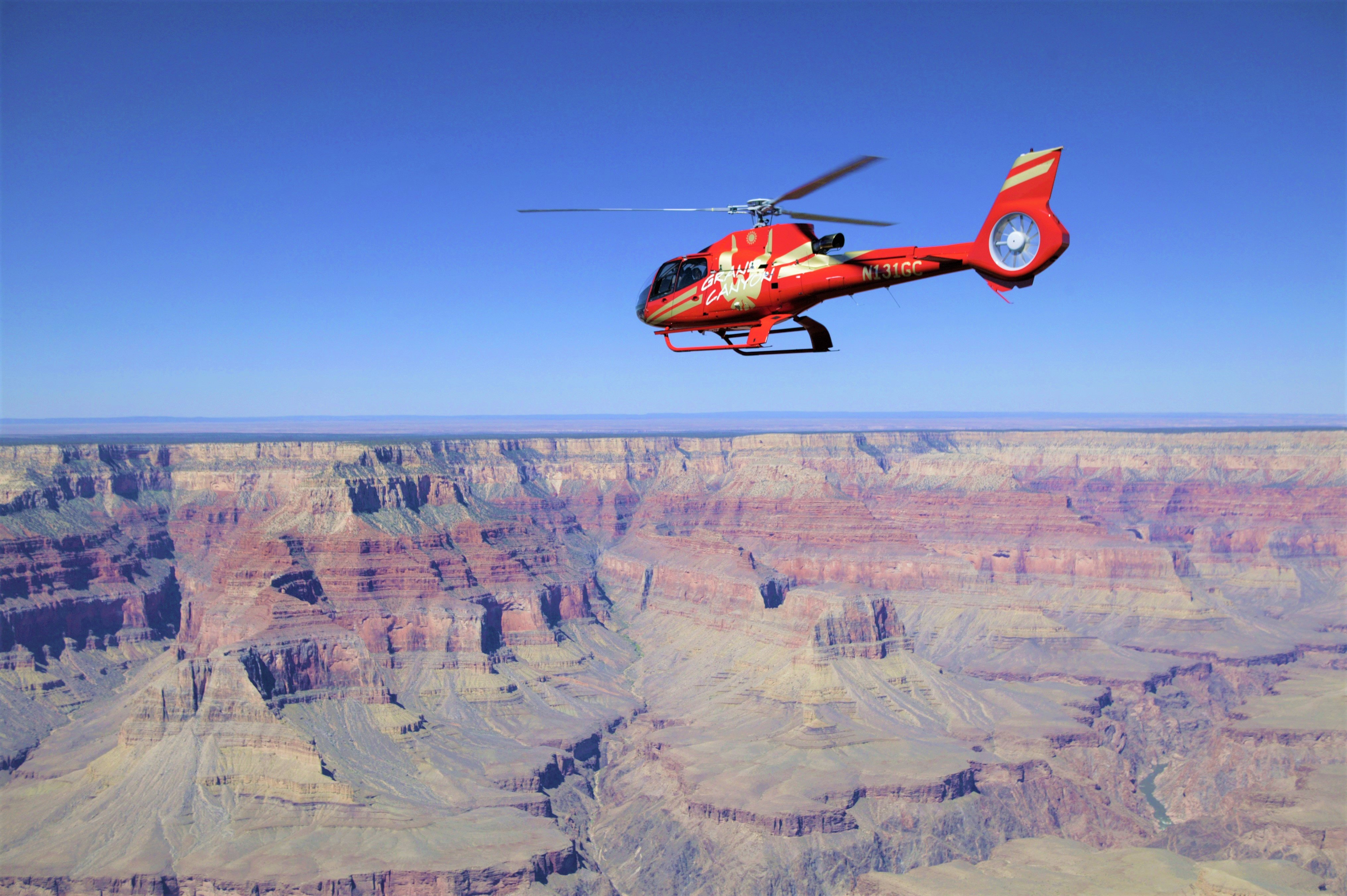
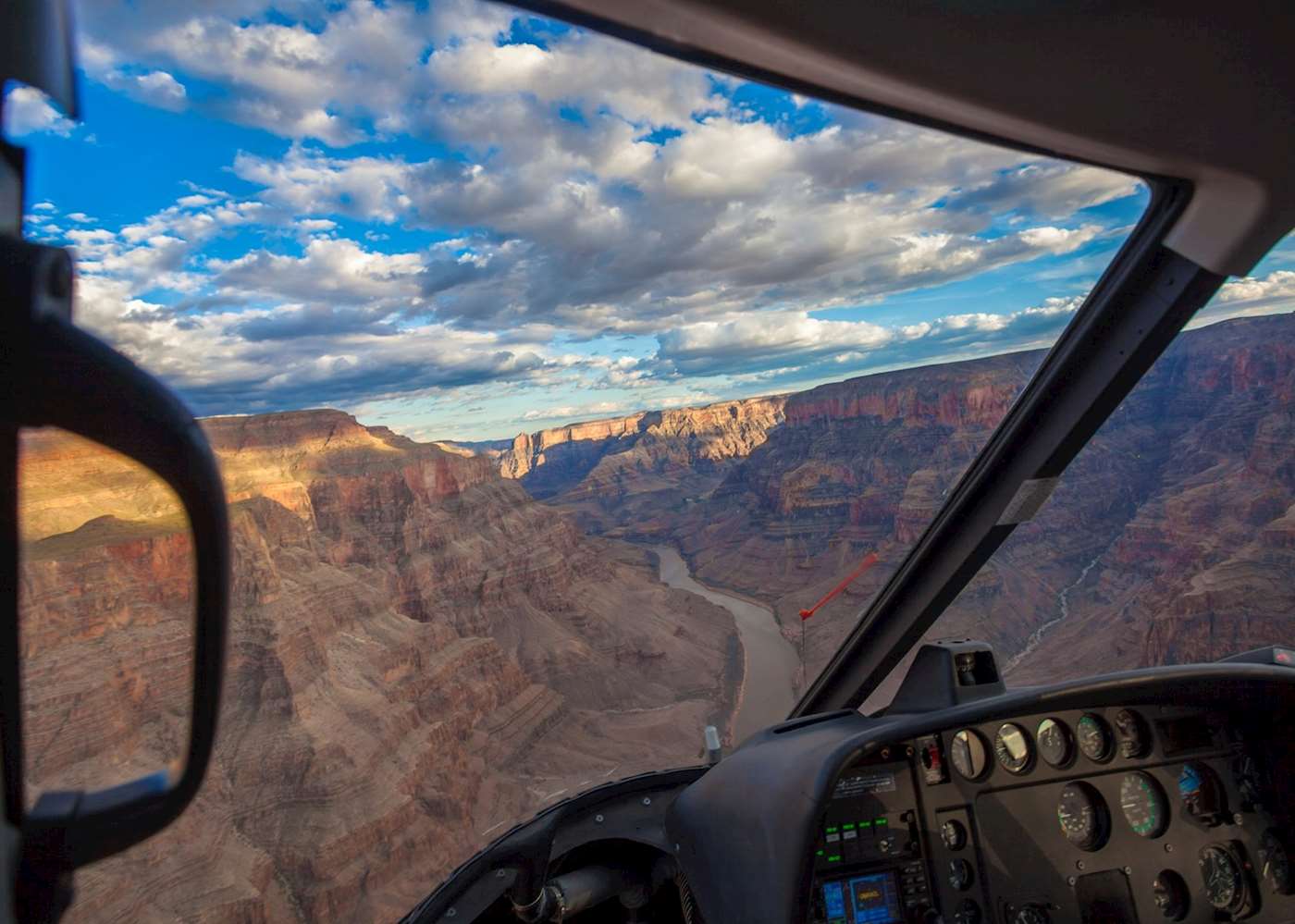
Shoot through the curved glass of the aircraft window as the pilot maneuvers past the rim. Purchasing grand canyon helicopter tour to bottom tickets guarantees this aerial perspective as you descend into the gorge. Angle your camera slightly away from the pane to minimize glare and capture the rotor blades sweeping across the sky.
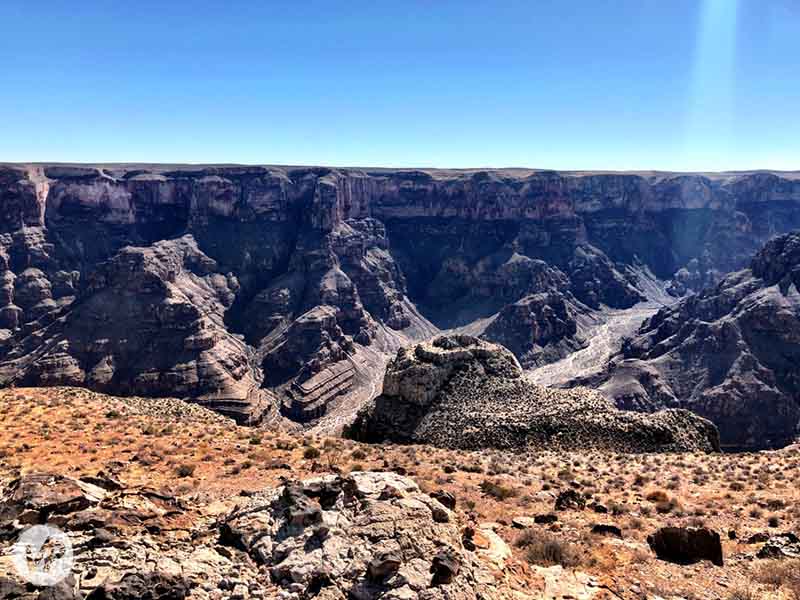
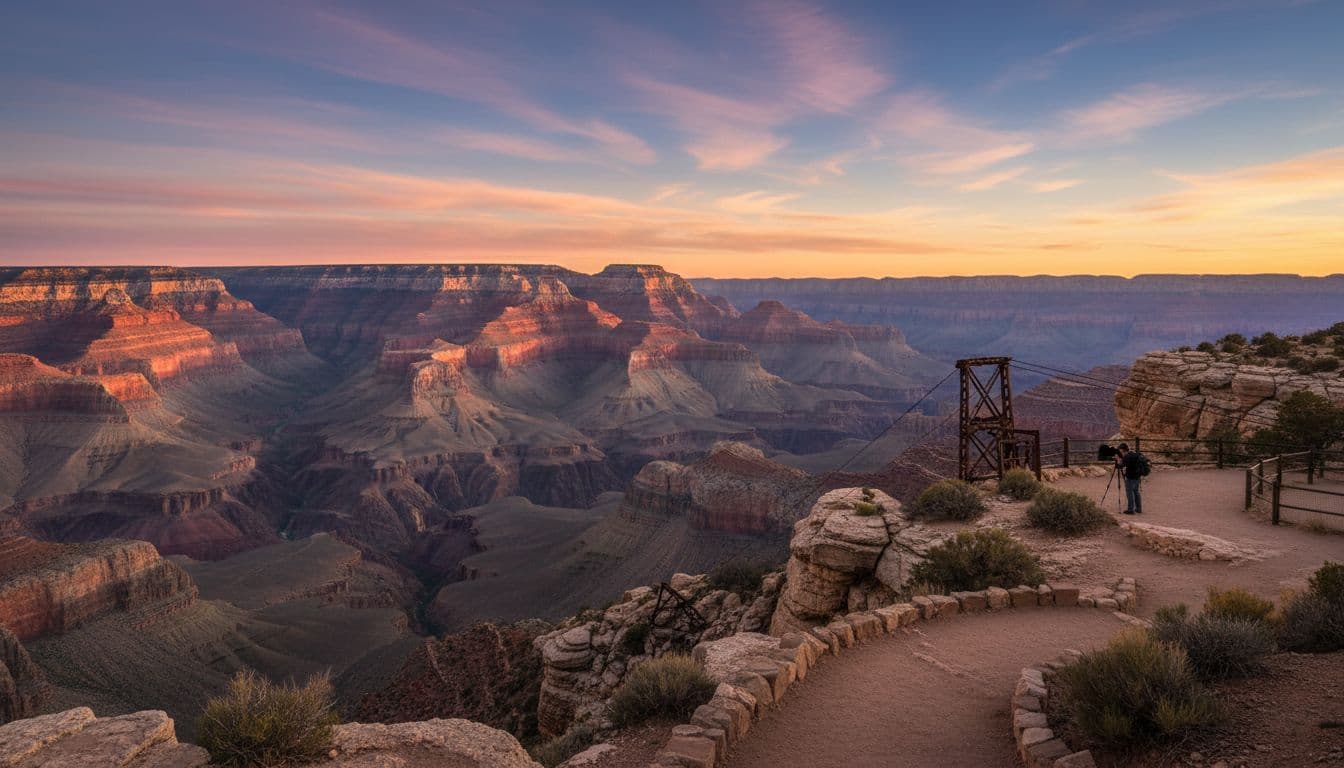
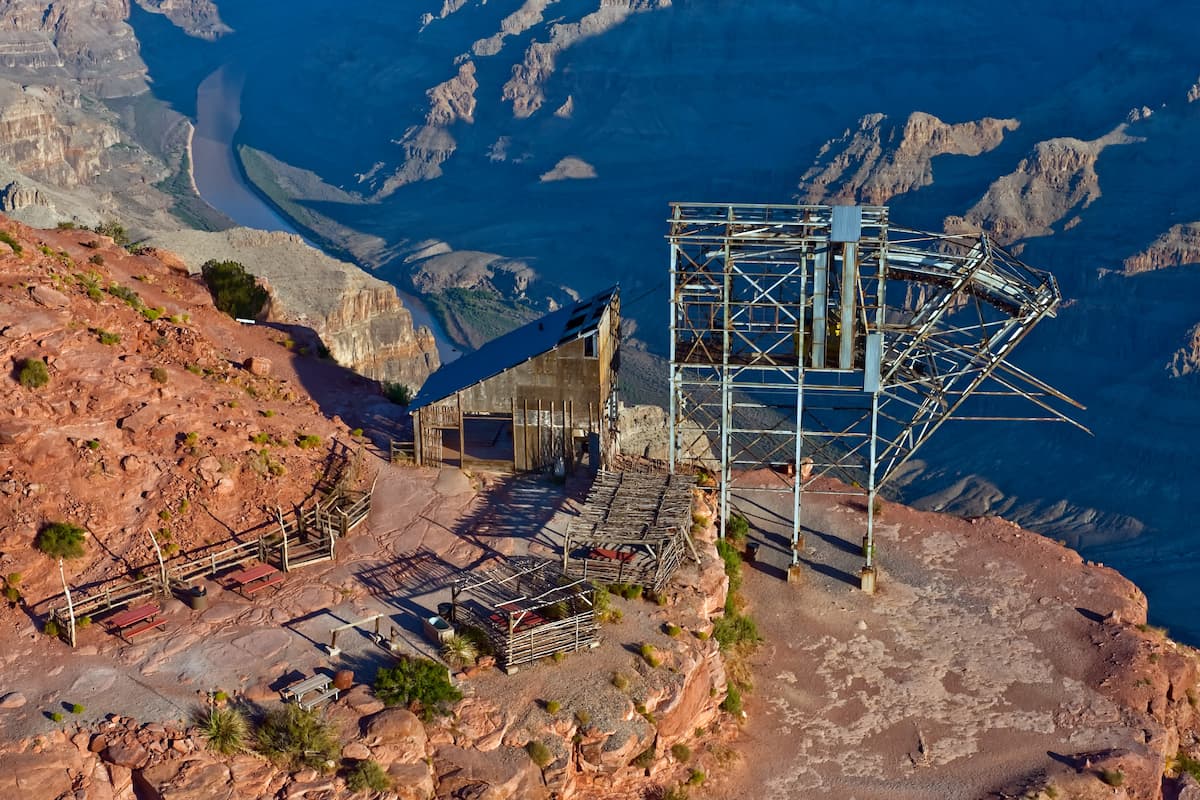
Walk to the quieter eastern edge of the peninsula to photograph the sweeping bends of the Colorado River far below. This viewpoint is featured on a grand canyon helicopter tour to bottom tour that combines a river landing with a rim visit. Frame the historic cable tramway ruins against the distant horizon.
Embarking on a grand canyon helicopter tour to bottom with children is a smooth way to explore the canyon floor without enduring long, steep hikes. Securing your departures in advance ensures a comfortable morning flight before temperatures rise.
For the grand canyon helicopter tour to bottom tour, the Federal Aviation Administration allows infants under two years old to fly free on an adult's lap. You must bring a birth certificate or passport to verify their age at check-in.
You cannot bring strollers or car seats inside the helicopter cabin due to strict space and weight distribution constraints. Families can check these items at the terminal base before boarding the West Rim helicopter experience.
Purchasing grand canyon helicopter tour to bottom tickets is ideal for kids aged four and up, as they easily handle noise-canceling headphones. Younger children may find the engine roar and cabin pressure changes disorienting.
To organize the grand canyon helicopter tour to bottom tours safely, staff assign seats at boarding based on individual passenger weights rather than family preferences. This means groups might be split across different rows to balance the aircraft.
Dining options at Grand Canyon West cater to visitors booking a grand canyon helicopter tour to bottom.
This sit-down venue offers panoramic views of the Skywalk alongside traditional Hualapai dishes and classic American options. It is an ideal spot to relax after finishing your grand canyon helicopter tour to bottom tour. Peak lunch hours can bring longer wait times.
Enjoy outdoor dining at picnic tables directly overlooking the canyon floor. They serve hearty plates of barbecue chicken and beef with classic sides. It is a popular stopover for visitors taking grand canyon helicopter tour to bottom tours.
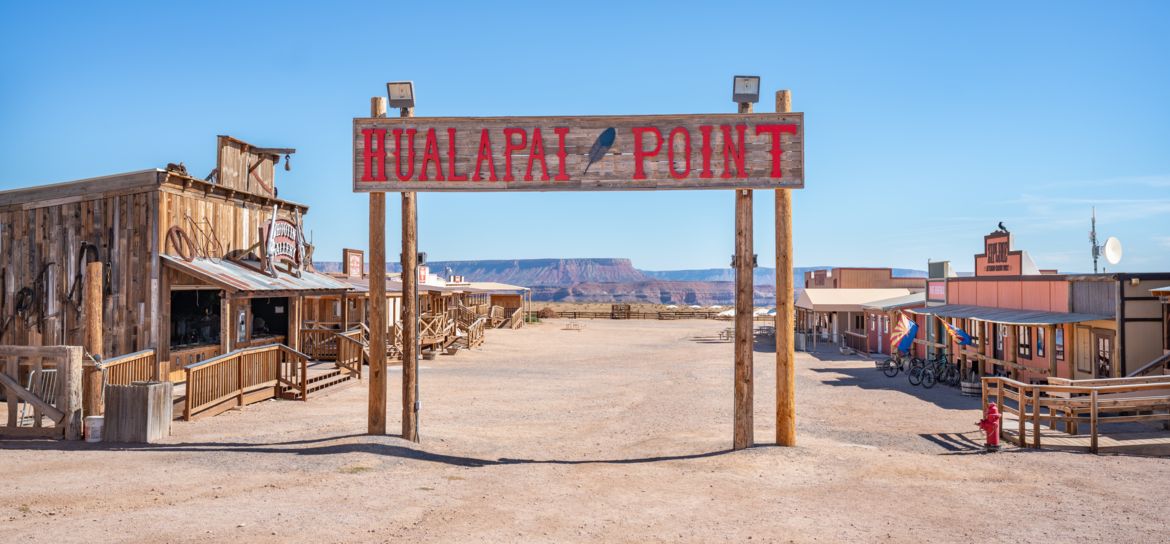
Located at Hualapai Point, this is the primary location for breakfast burritos and local fry bread during a Grand Canyon West Rim tour. The eatery is a convenient stop before boarding the shuttle service.
Perfect for grab-and-go options like sandwiches and hot dogs near the glass walkway. This spot is designed for travelers holding grand canyon helicopter tour to bottom tickets who want a fast bite.
Everything you need to know for your journey
The Grand Canyon helicopter tour to bottom typically takes about 30 to 45 minutes in total. This includes a 5-to-7 minute flight each way and approximately 20 minutes on the canyon floor.
Yes, aircraft safety regulations require weight checks for all passengers during check-in. Individual weight limits and combined helicopter capacity limits are strictly enforced by the operators.
No, a Grand Canyon helicopter tour to bottom does not automatically include Skywalk access. You must purchase a separate ticket for the Skywalk, although general admission to Grand Canyon West is required.
Wear comfortable, weather-appropriate clothing and flat, closed-toe shoes. Hats and loose items must be secured before boarding the helicopter.
While the terminal is accessible, a Grand Canyon helicopter tour to bottom requires physical mobility to navigate the canyon floor. Guests with limited mobility should contact the operator before booking.
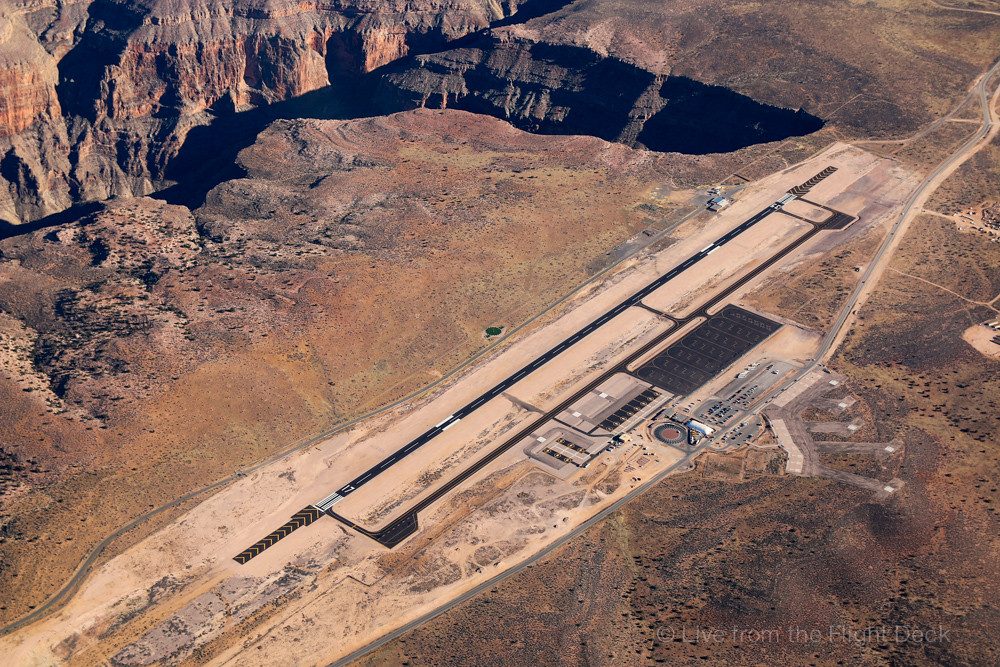
Flights depart from the Grand Canyon West Airport terminal at 5001 East Diamond Bar Road. You can reach the location by driving from Las Vegas or booking a tour bus that includes transportation.
Only small personal items are allowed on a Grand Canyon helicopter tour to bottom due to weight limits. Large backpacks must be checked at the terminal before flight.
Most operators allow you to cancel a Grand Canyon helicopter tour to bottom up to 24 hours before departure for a full refund. The 67 USD Grand Canyon West general admission fee is non-refundable.
No food is served during a Grand Canyon helicopter tour to bottom, and eating is prohibited on board the aircraft. Dining facilities are available at the main terminal before or after your flight.
Yes, children of all ages can participate in the flight. Infants under two years old are allowed to sit on an adult's lap, while older children require their own ticketed seat.
Home to a replica Native American village representing regional tribes.
A scenic peninsula offering 360-degree canyon views and the ruins of an old tramway.
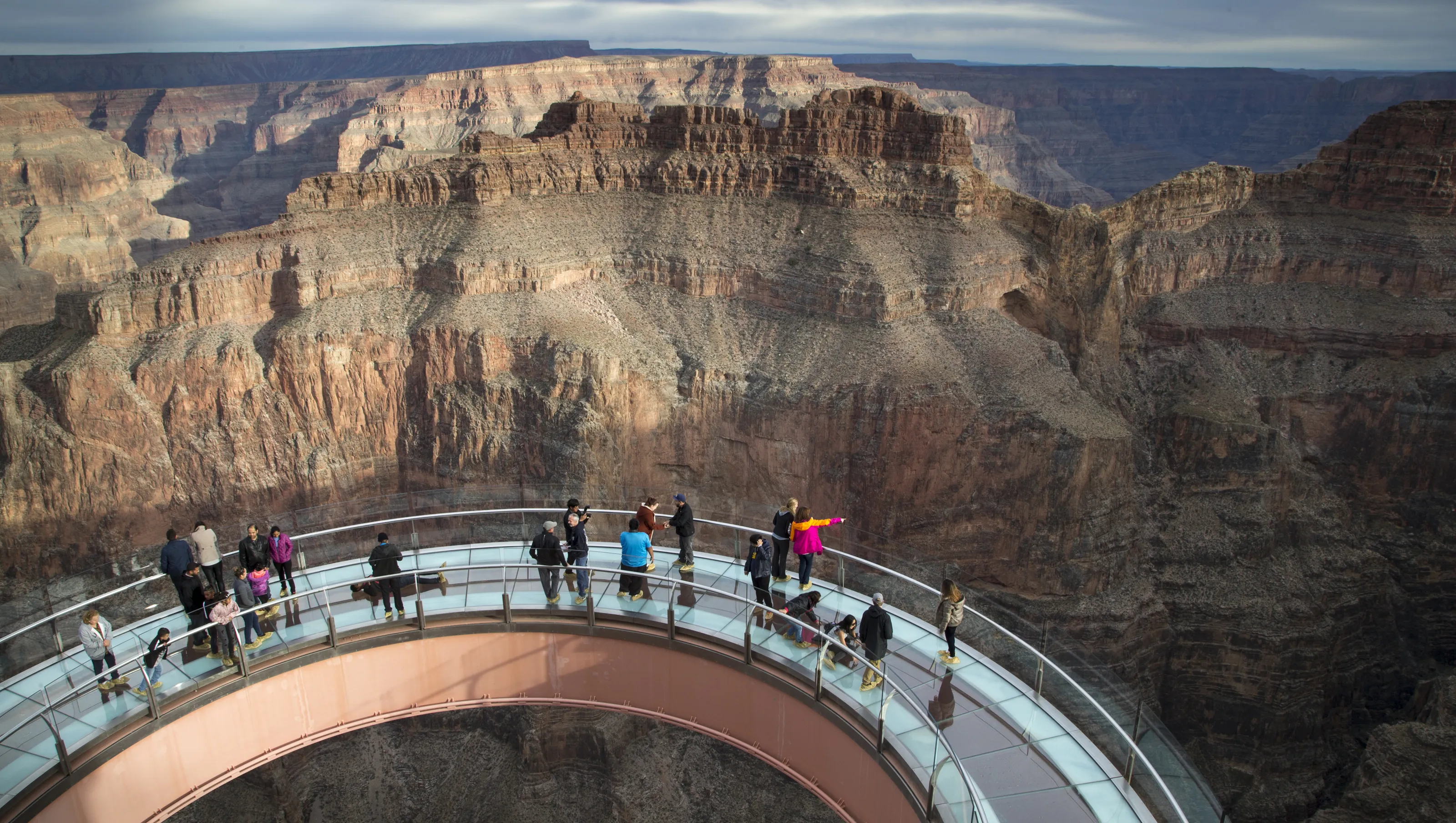
A horseshoe-shaped glass bridge extending 70 feet over the edge of the canyon.
A cultural center showcasing Hualapai traditions, crafts, and history.
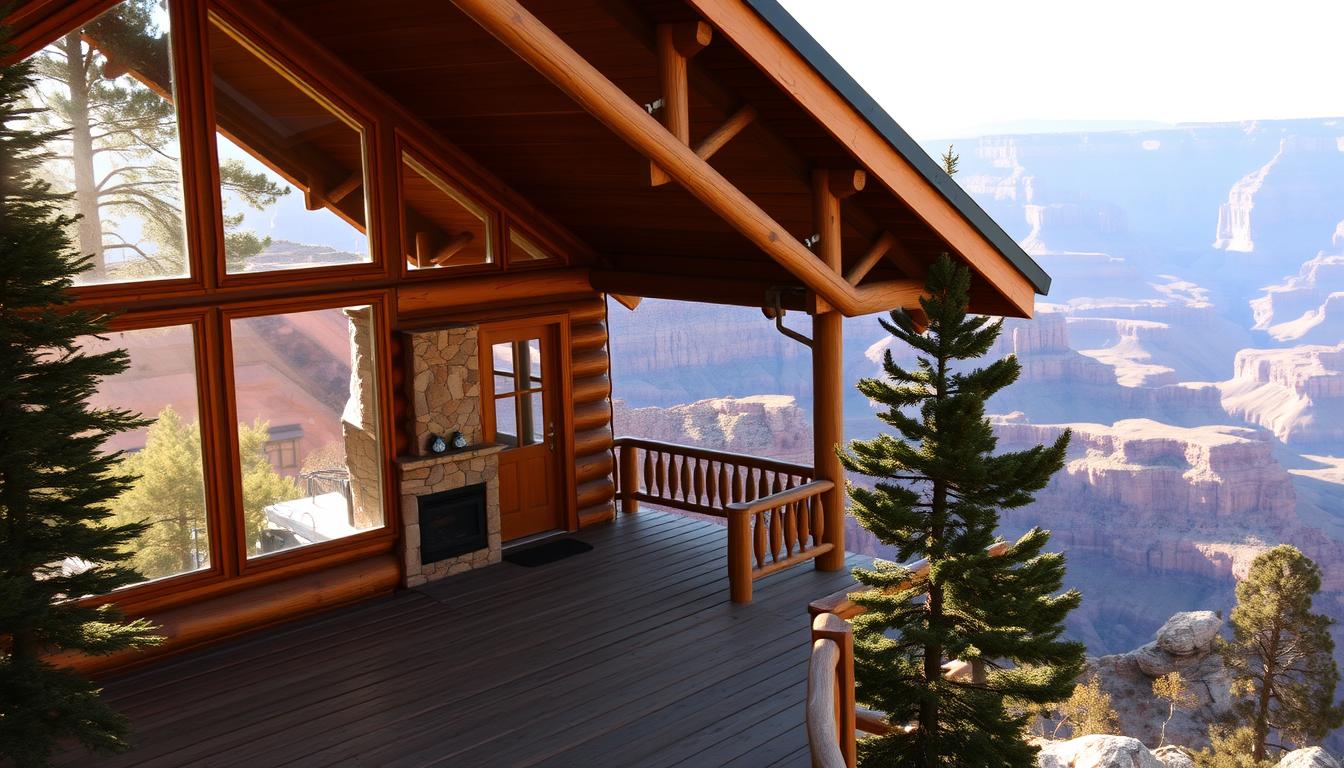
Rustic cabins located near the rim, providing a convenient overnight stay close to the terminal.
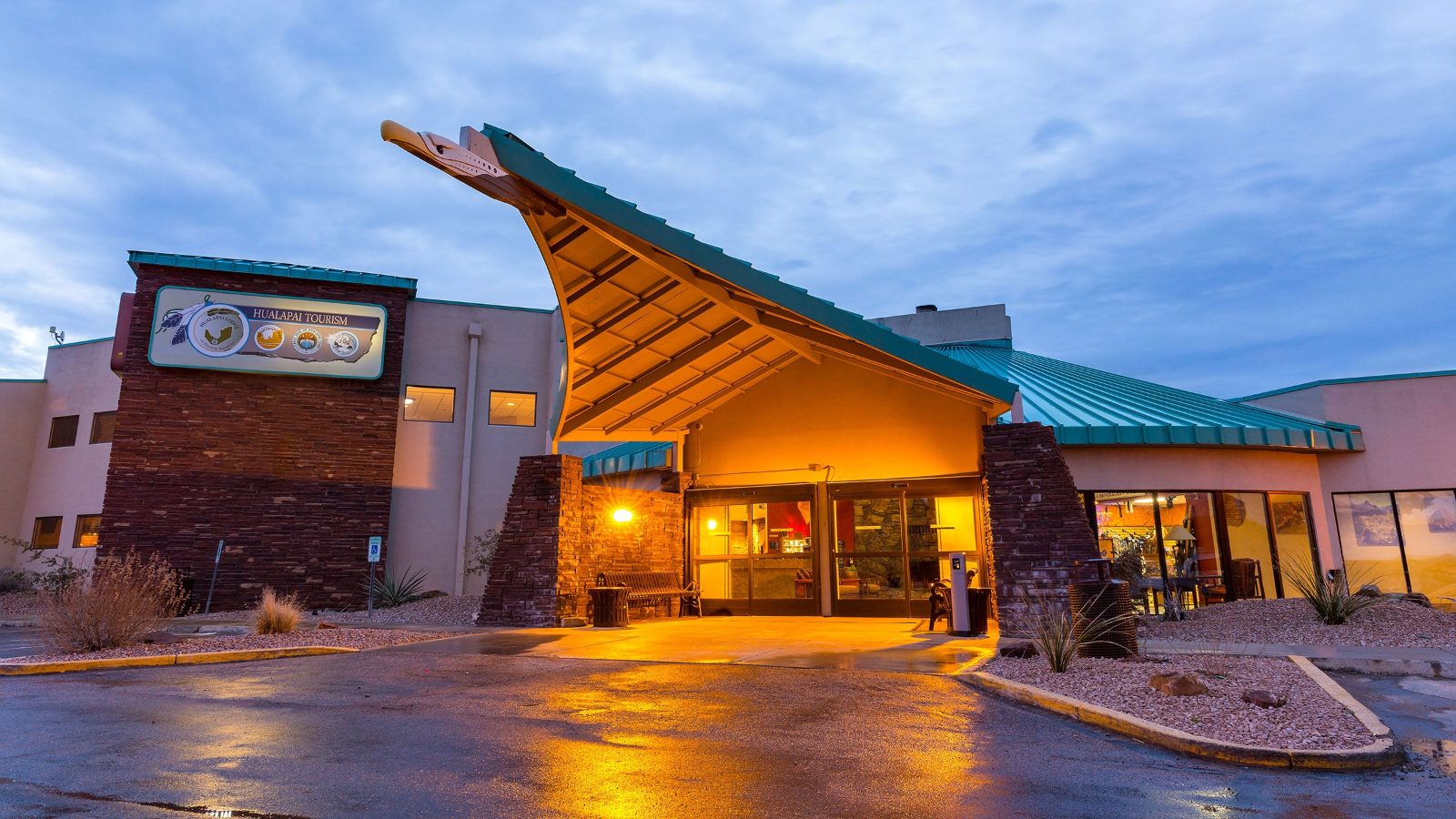
Located in Peach Springs along Route 66, offering comfortable lodging and dining options run by the Hualapai Tribe.
The main residential and commercial center of the Hualapai Reservation, serving as a base for visitors.
Join thousands of happy travelers who have discovered this incredible experience
Book Your Experience Now